WattSearch
Your WattLeaderboard
Language
Autoplay narration
Appearance

Feedback

Have a question or an idea? Something not working? Send us a message.

What would you like to share?
Up to 3 files, 5 MB each, 12 MB total.
Or contact us directly

Direct contacts open a separate chat or email. Files attached here are not included.

arohalya@gmail.com
A little wonder, every day

Forests and Atmospheric Oxygen
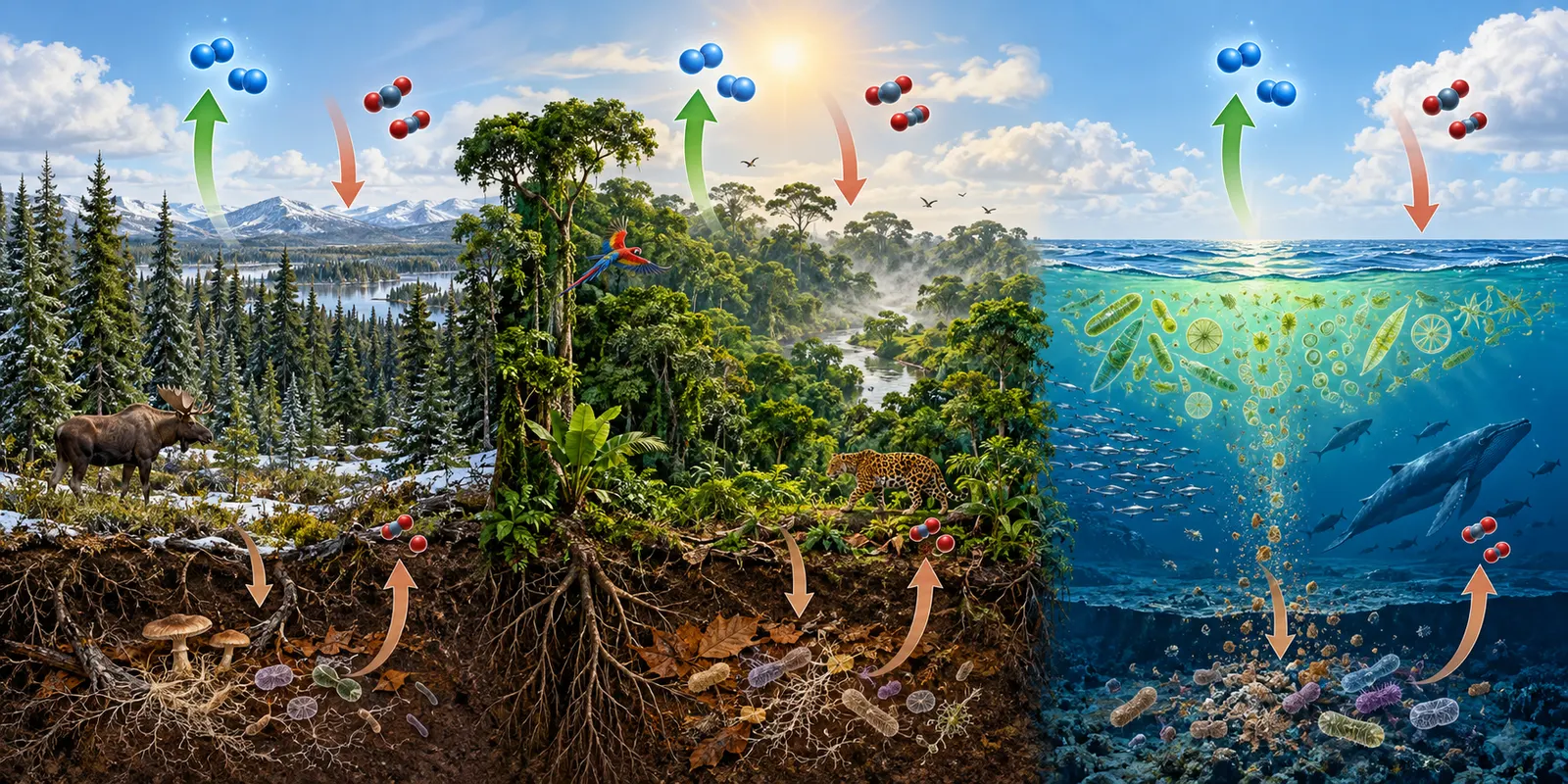
AI-синтетична схема екосистем і циклу кисню; це не дані або точна кількісна діаграма. Промпт: “Editorial environmental illustration showing boreal taiga, Amazon rainforest and ocean phytoplankton as different oxygen-cycle contributors, with arrows balanced by respiration and decomposition, no text, non-quantitative diagram, clean horizontal.”
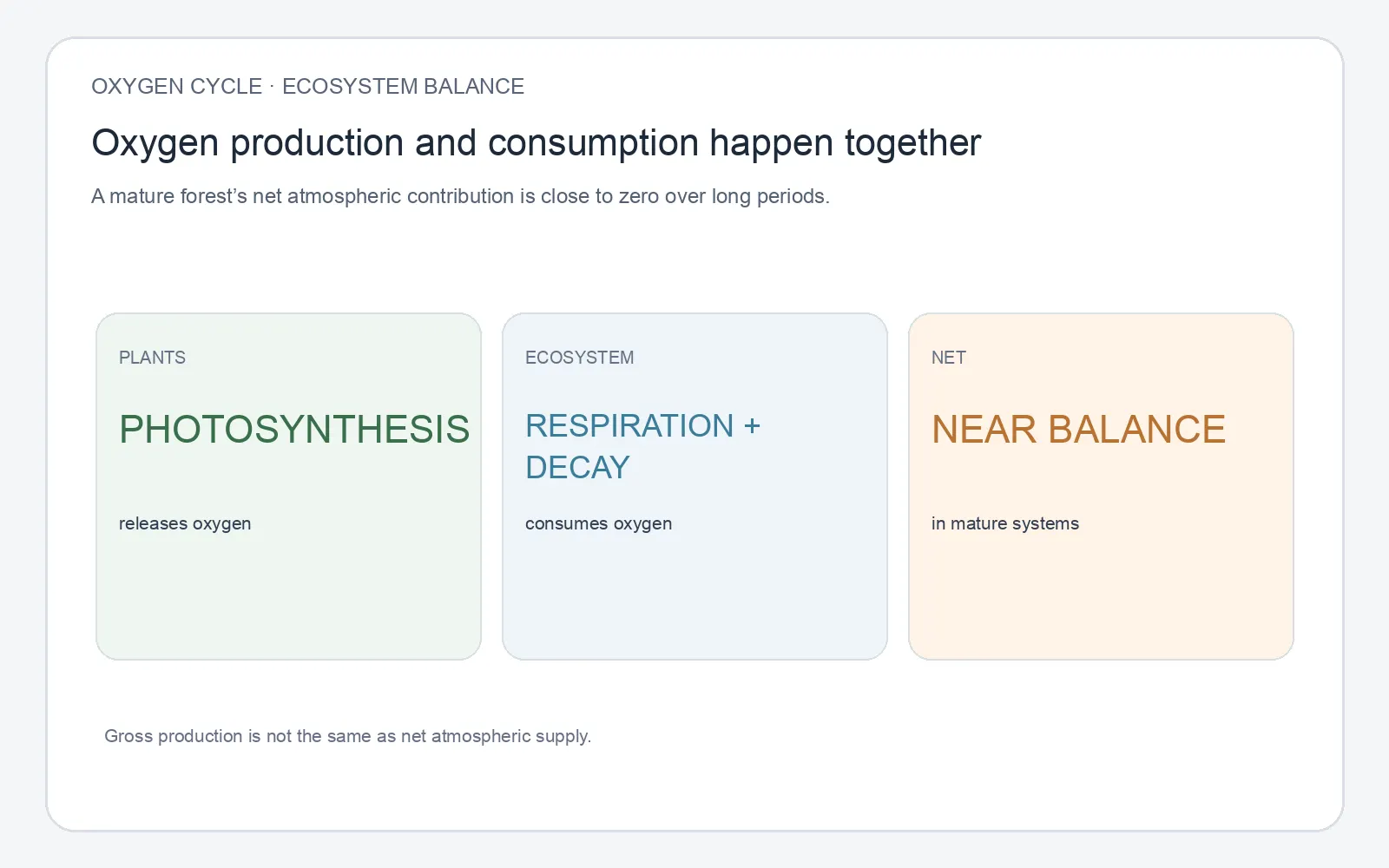
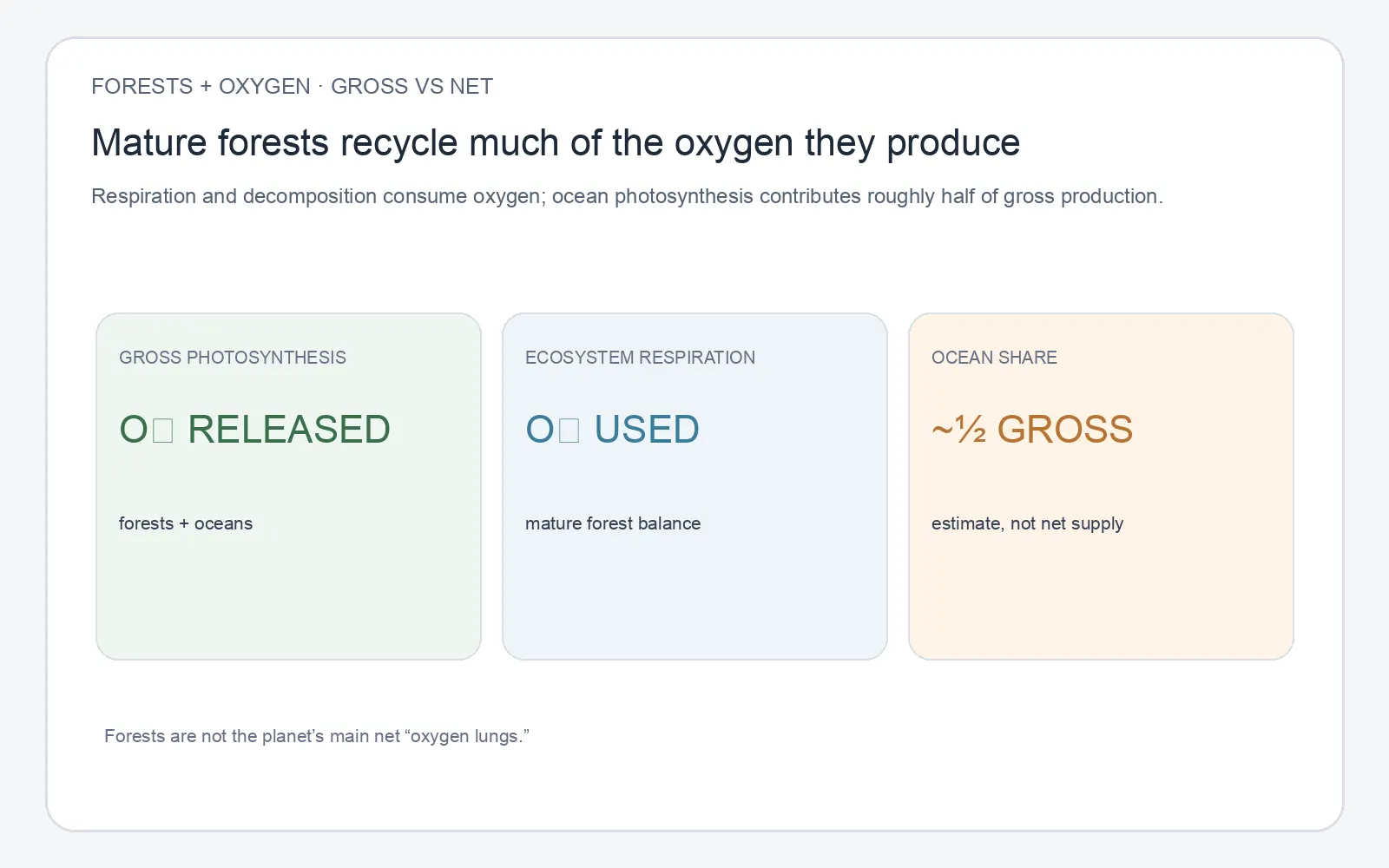
Custom source-based educational infographic created 2026-10-19 and visually checked. It summarizes the fact-specific evidence, scope and caveats from post.md and sources.md; original Pillow illustration, no imported photo assets.

AI-синтетична схема екосистем і циклу кисню; це не дані або точна кількісна діаграма. Промпт: “Editorial environmental illustration showing boreal taiga, Amazon rainforest and ocean phytoplankton as different oxygen-cycle contributors, with arrows balanced by respiration and decomposition, no text, non-quantitative diagram, clean horizontal.”

Listen to fact0:00 / —

The taiga, Amazon, and African equatorial forests photosynthesize and release oxygen, but they should not be called the planet’s main “lungs” in the sense of net oxygen supply. In mature ecosystems, most oxygen produced is consumed by organism respiration and decomposition, so a biome’s net contribution to atmospheric oxygen is close to zero. Roughly half of gross global oxygen production is associated with the ocean, including photosynthesis by microorganisms. Forests are vital for climate, the carbon cycle, and biodiversity, but not because they supply the “lion’s share” of the oxygen we breathe. [1–3]