Exoskeletons: different tasks and different limits
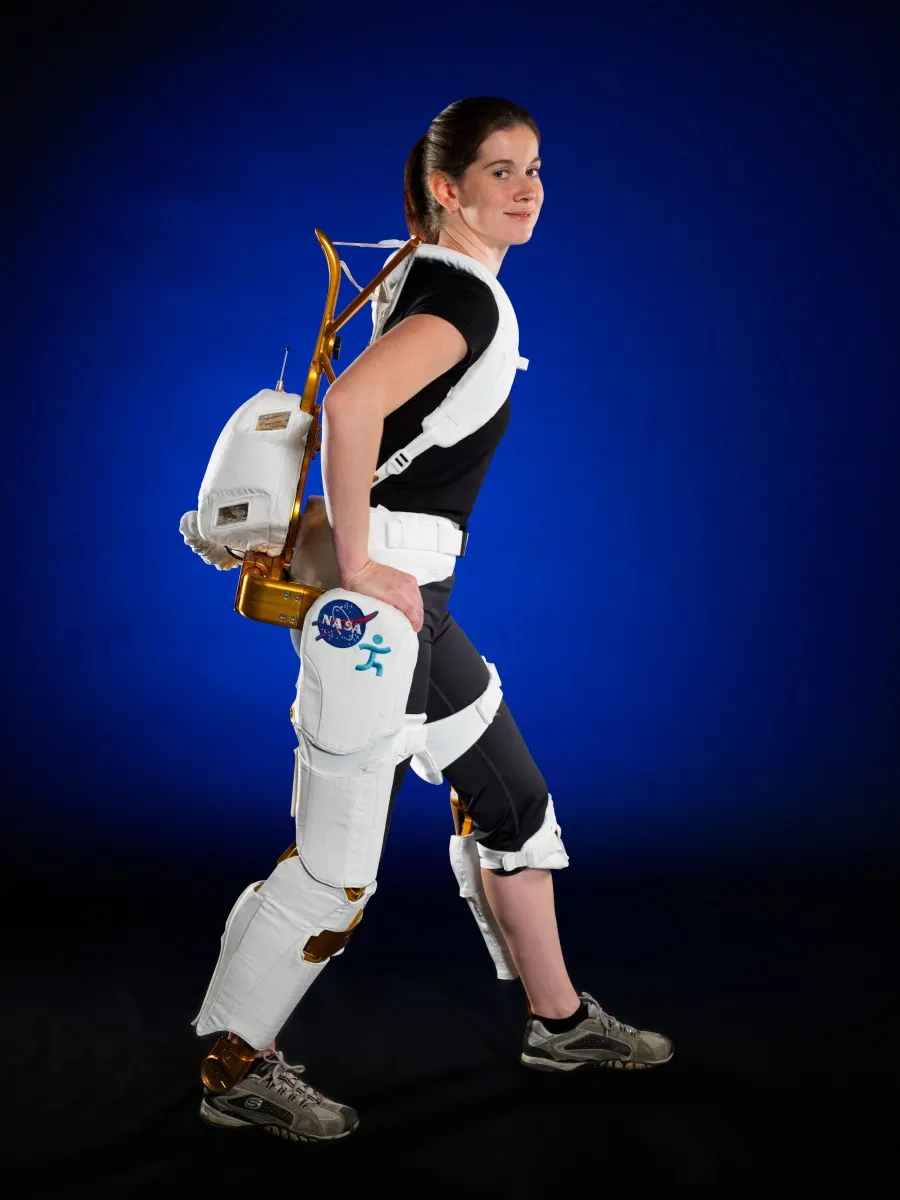
Інженерка Shelley Rea демонструє дослідний екзоскелет NASA X1 1 червня 2012 року; це прототип NASA, не серійна система ReWalk / Project engineer Shelley Rea demonstrates NASA’s experimental X1 exoskeleton on 1 June 2012; this is a NASA prototype, not the ReWalk medical system. Credit: NASA/Robert Markowitz. Source: https://www.nasa.gov/technology/nasas-ironman-like-exoskeleton-could-give-astronauts-paraplegics-improved-mobility-and-strength/
An exoskeleton is an external structure that supports movement or carries part of a load. Powered medical models can help selected people with spinal cord injuries stand and walk after assessment and training; this does not restore movement for every form of paralysis. The FDA allowed ReWalk to be marketed in the United States in 2014 for specified users and conditions. Industrial models serve different aims, such as reducing physical effort in particular working postures. They do not automatically guarantee safety or faster work.