Why sculptures get winter covers

Титульна AI-згенерована ілюстрація / AI-generated cover illustration. Symbolic scene of gloved conservator hands fitting an opaque weatherproof winter cover around an invented outdoor marble sculpture, not an actual Harvard object.
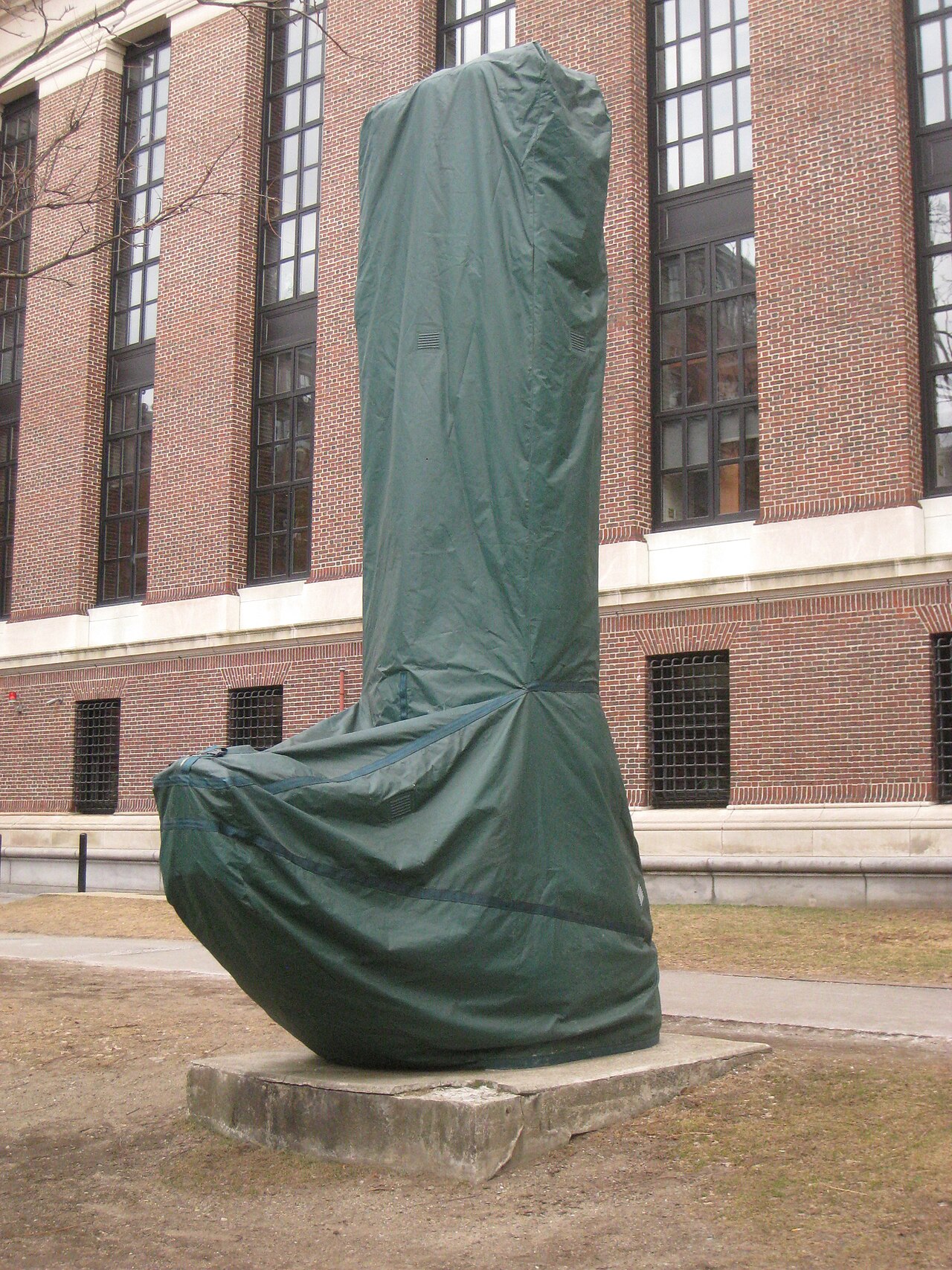
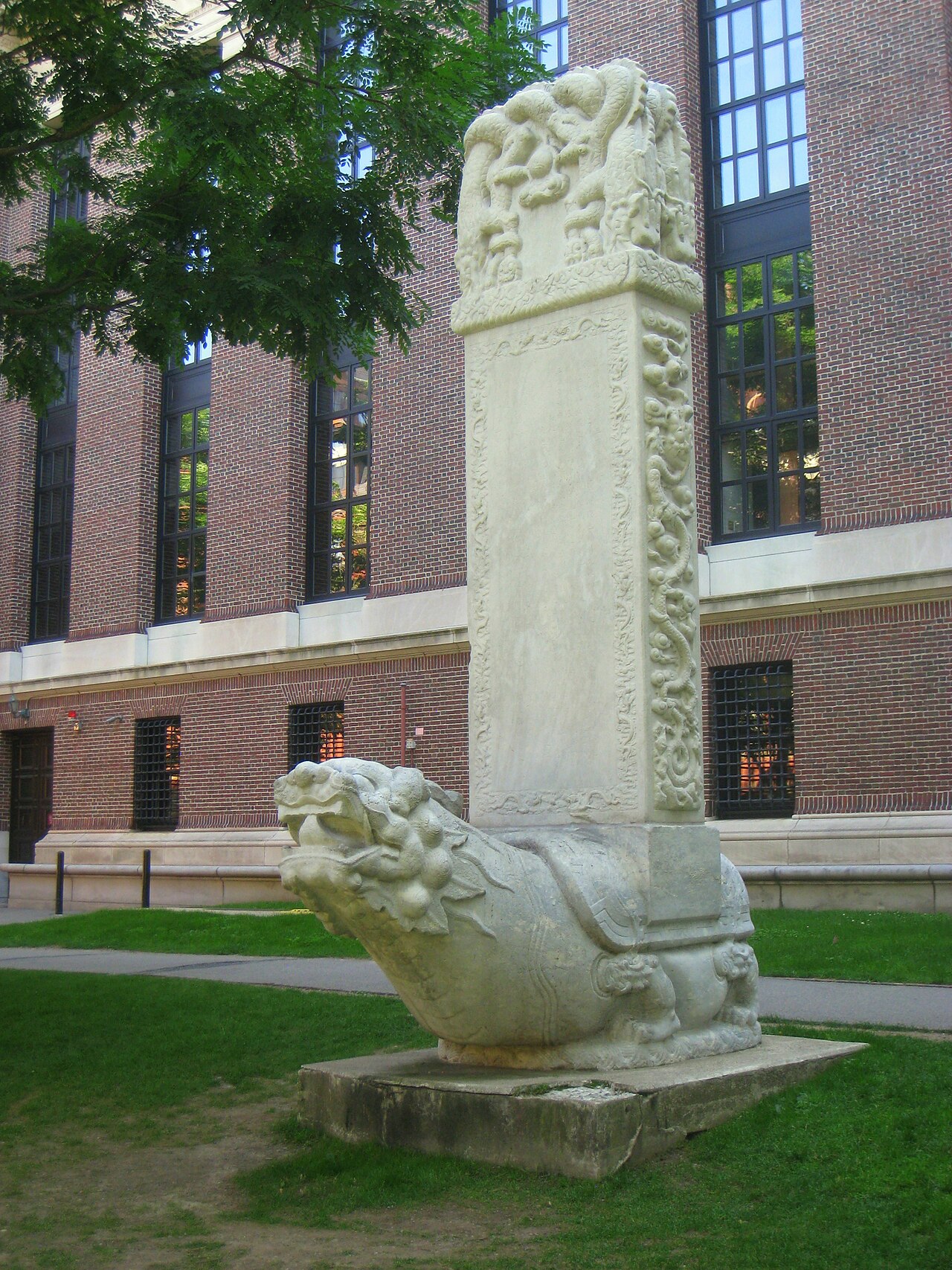
Some Harvard sculptures have been covered during winter to protect them from damaging precipitation. Historical reports describe both a Chinese marble stele and a bronze sculpture by Henry Moore. Slowly melting snow prolongs the surface’s contact with water and pollutants.
Marble is not chemically unchanging: acids can dissolve the calcite that makes up most of the stone and alter its surface. As material is lost, carved details become less distinct. A cover is one way to reduce exposure; this does not mean every university statue is marble or that frost simply turns stone into gypsum.