WattSearch
Your WattLeaderboard
Language
Autoplay narration
Appearance

Feedback

Have a question or an idea? Something not working? Send us a message.

What would you like to share?
Up to 3 files, 5 MB each, 12 MB total.
Or contact us directly

Direct contacts open a separate chat or email. Files attached here are not included.

arohalya@gmail.com
A little wonder, every day

The Double-Helix Model of DNA
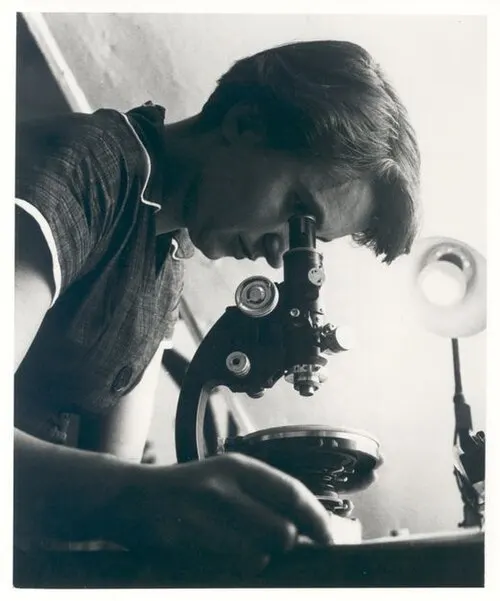
Rosalind Franklin using a microscope, 1955; from the personal collection of Jenifer Glynn, credited to MRC Laboratory of Molecular Biology. Commons file page: https://commons.wikimedia.org/wiki/File:Rosalind_Franklin.jpg. CC BY-SA 4.0, https://creativecommons.org/licenses/by-sa/4.0/. Attribute “MRC Laboratory of Molecular Biology / Wikimedia Commons, CC BY-SA 4.0”; indicate changes and share adaptations under the same or compatible license. 500×601 JPEG thumbnail, no further edits; checked 2026-10-16.
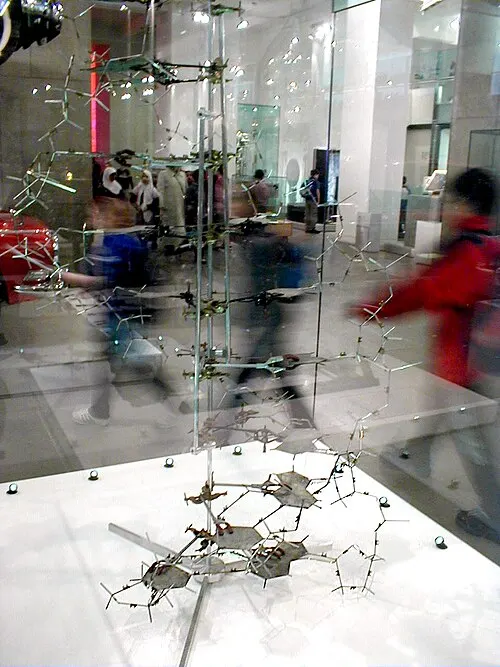
Crick and Watson’s 1953 DNA model on display at the Science Museum, London. Commons file page: https://commons.wikimedia.org/wiki/File:DNA_Model_Crick-Watson.jpg. Public domain worldwide, released by author Alkivar. Credit “Alkivar / Wikimedia Commons”; 500×667 JPEG thumbnail, no further edits; checked 2026-10-16.
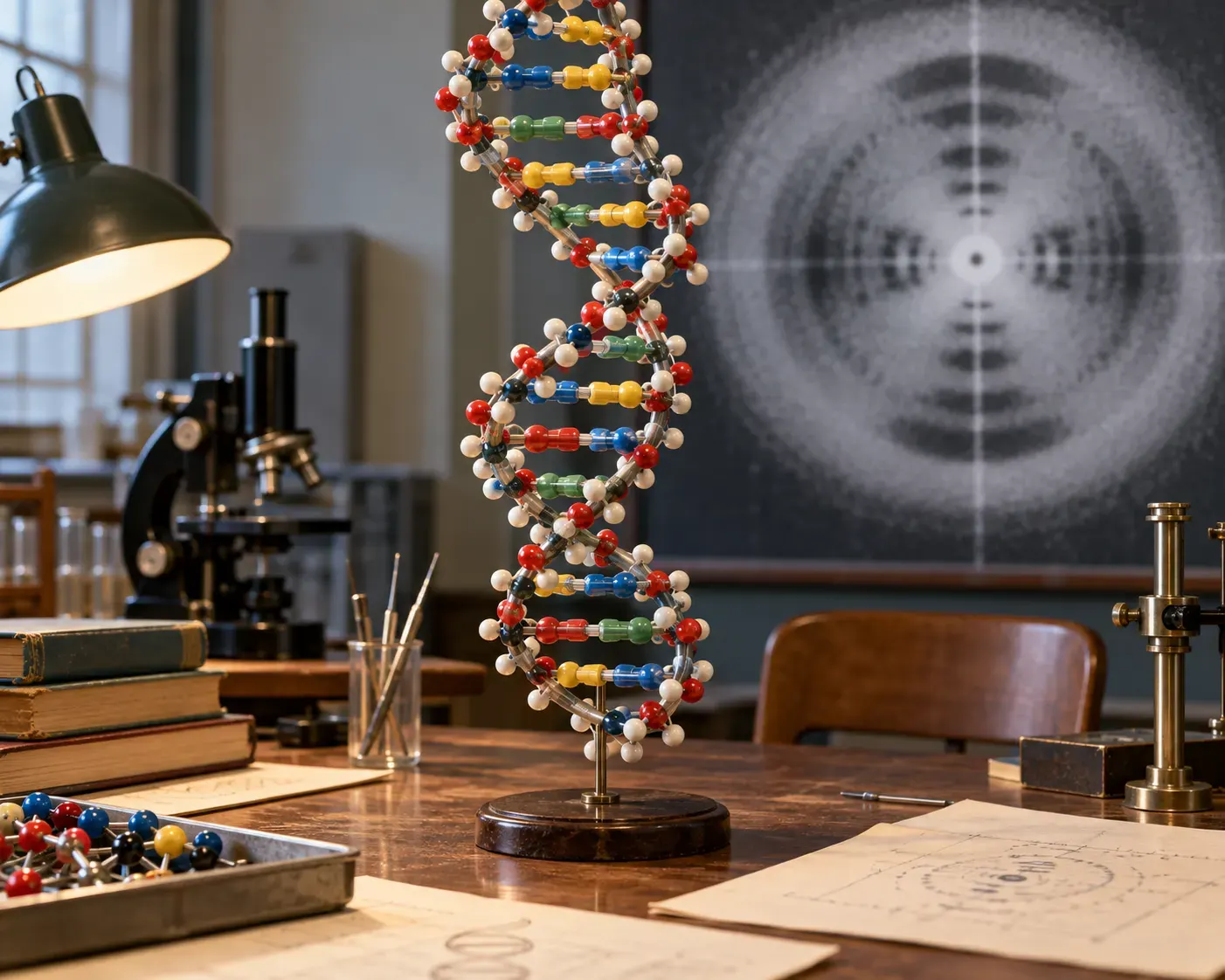
unique AI-generated scientific illustration; synthetic conceptual image, not an authentic 1953 photograph or original model.

Rosalind Franklin using a microscope, 1955; from the personal collection of Jenifer Glynn, credited to MRC Laboratory of Molecular Biology. Commons file page: https://commons.wikimedia.org/wiki/File:Rosalind_Franklin.jpg. CC BY-SA 4.0, https://creativecommons.org/licenses/by-sa/4.0/. Attribute “MRC Laboratory of Molecular Biology / Wikimedia Commons, CC BY-SA 4.0”; indicate changes and share adaptations under the same or compatible license. 500×601 JPEG thumbnail, no further edits; checked 2026-10-16.

Listen to fact0:00 / —

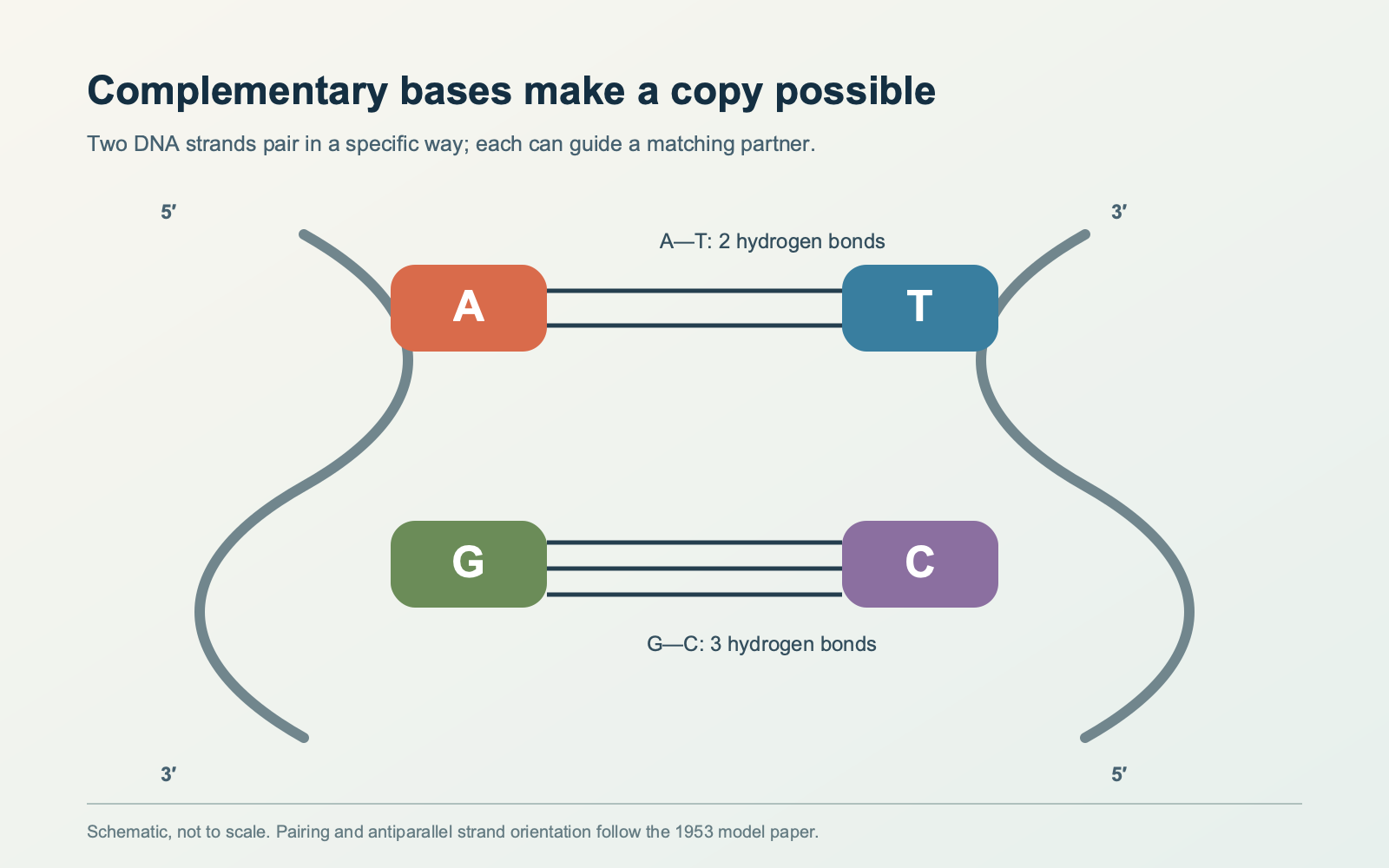
In 1953, James Watson and Francis Crick published a model of DNA as a double helix. They proposed that the molecule’s two strands twist around one another and that bases on the strands pair in a complementary way. This structure suggested how each strand could serve as a template for copying DNA.

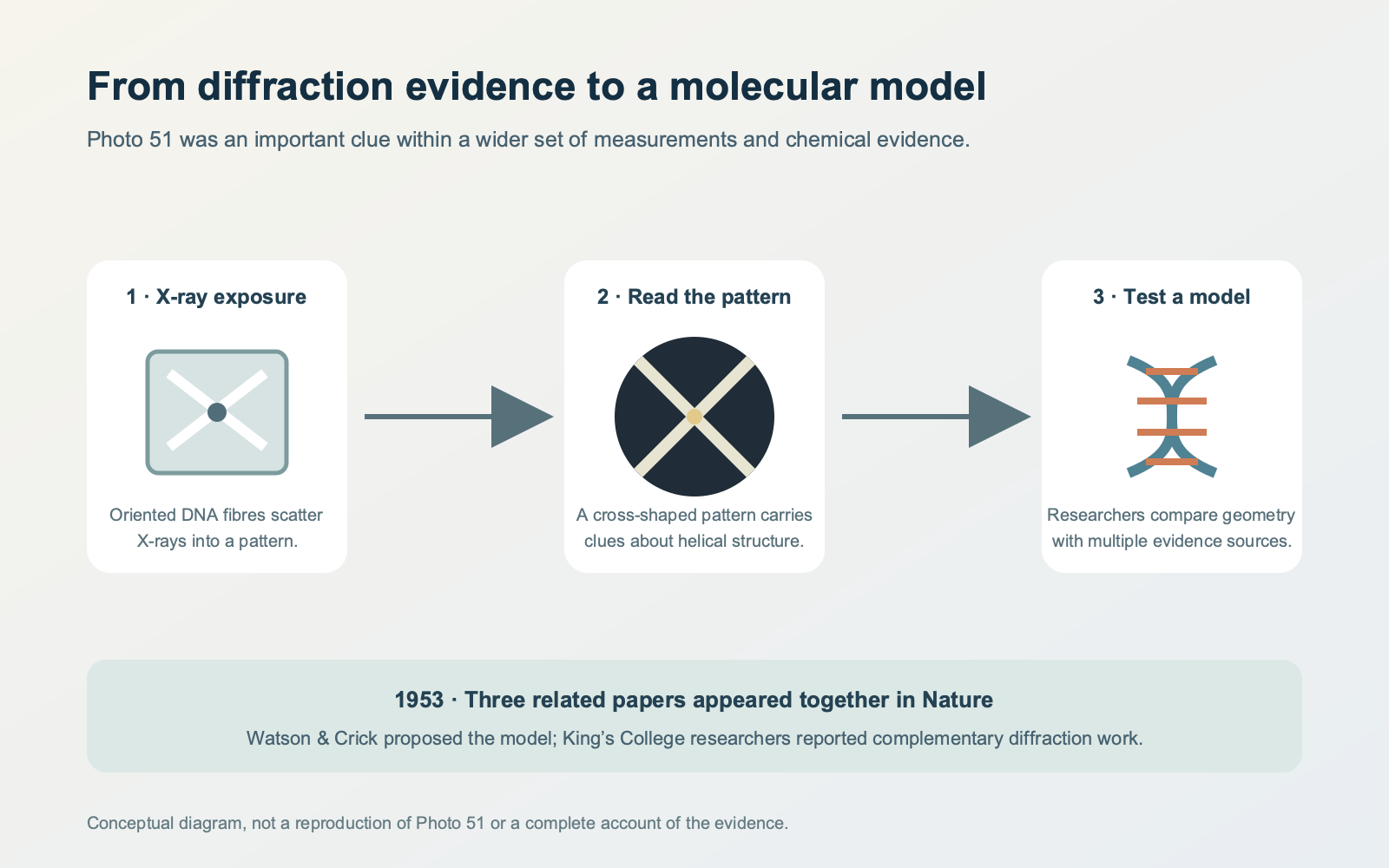
The model relied on experimental evidence and the work of many scientists. At King’s College London, Rosalind Franklin, Raymond Gosling, Maurice Wilkins, and colleagues studied DNA using X-ray diffraction. The double-helix story therefore includes both Watson and Crick’s model and the important experimental work of the King’s College team.