Earth's Sidereal Day
Yes: a sidereal day lasts about 23 hours, 56 minutes, and 4 seconds. It is the time Earth takes to rotate relative to distant stars; NASA gives a more precise value of about 23 h 56 m 4.09 s.
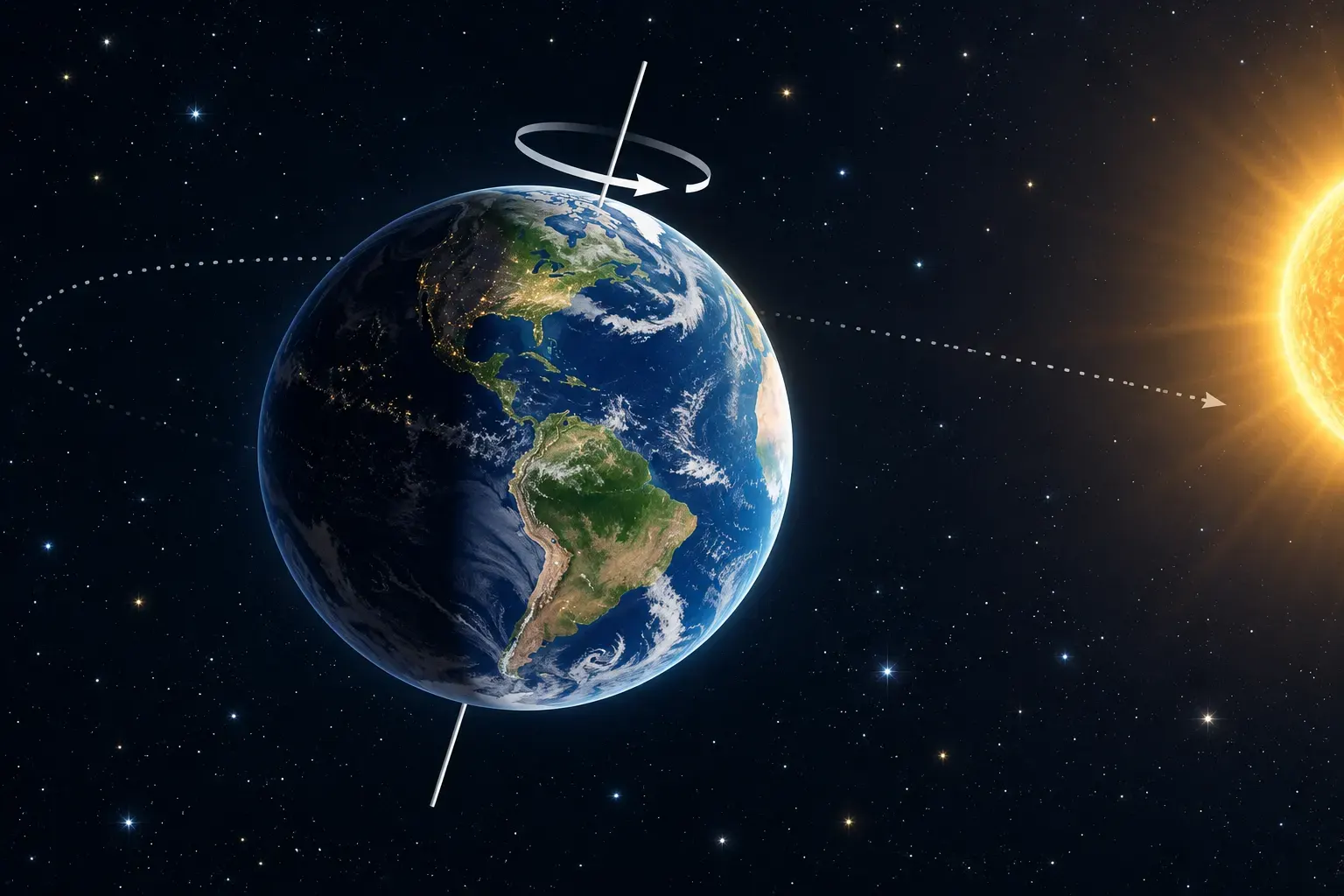
The familiar 24-hour solar day is measured from one local noon to the next. Because Earth also moves along its orbit around the Sun, after one rotation relative to the stars it must turn a little farther for the Sun to return to the same meridian. That is why solar and sidereal days differ by about four minutes.