WattSearch
Your WattLeaderboard
Language
Autoplay narration
Appearance

Feedback

Have a question or an idea? Something not working? Send us a message.

What would you like to share?
Up to 3 files, 5 MB each, 12 MB total.
Or contact us directly

Direct contacts open a separate chat or email. Files attached here are not included.

arohalya@gmail.com
A little wonder, every day

Fact 2256 — devices for spanning a crossbow
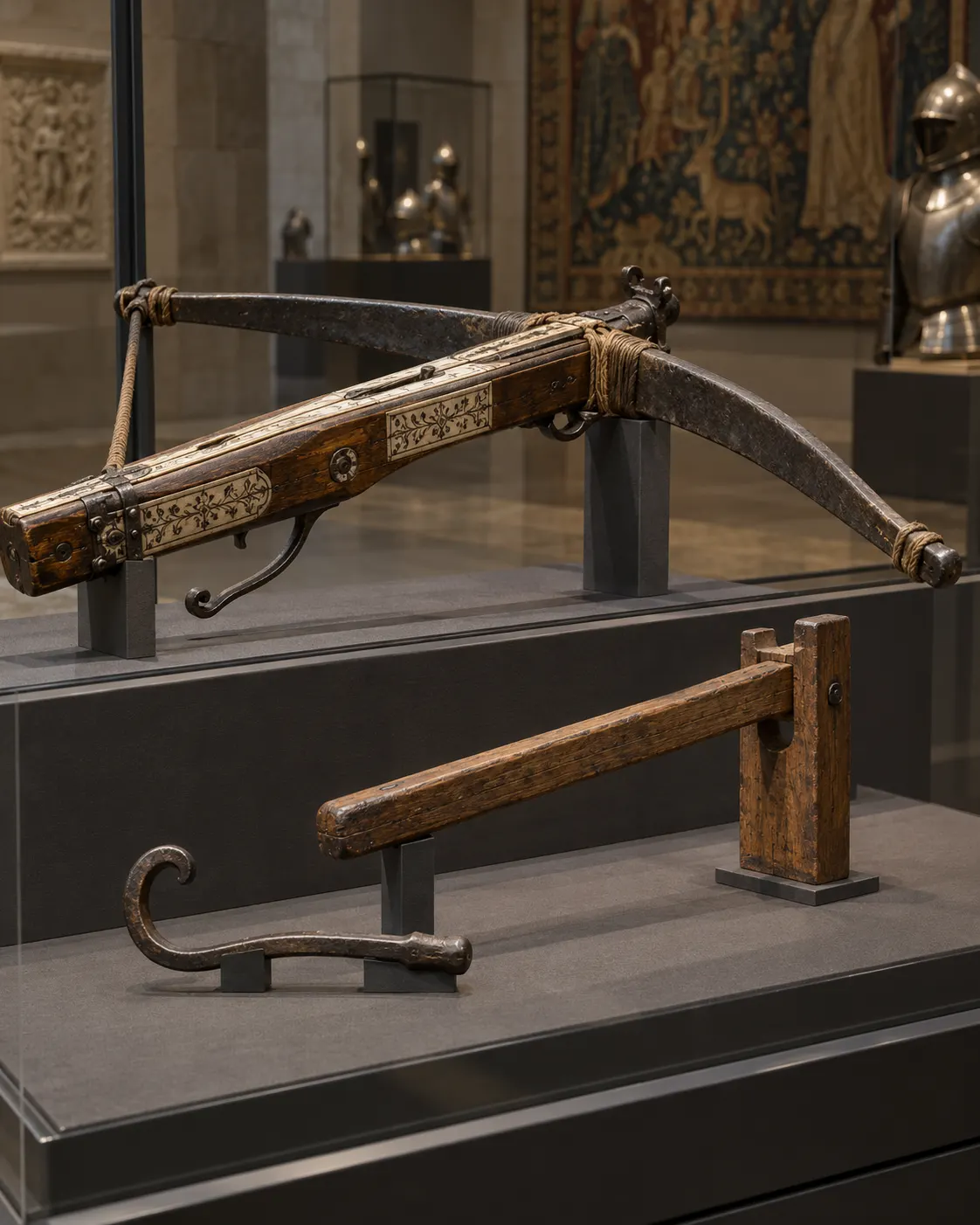
AI-generated with OpenAI image generation. Prompt: “Photorealistic editorial cover about historical crossbow spanning mechanisms. A medieval crossbow displayed safely in a museum case beside several nonfunctional antique spanning aids such as a simple hook and a wooden lever, no bolts, no people, no action, no readable text or logos. Neutral artifact light, scholarly documentary style, portrait 4:5.”
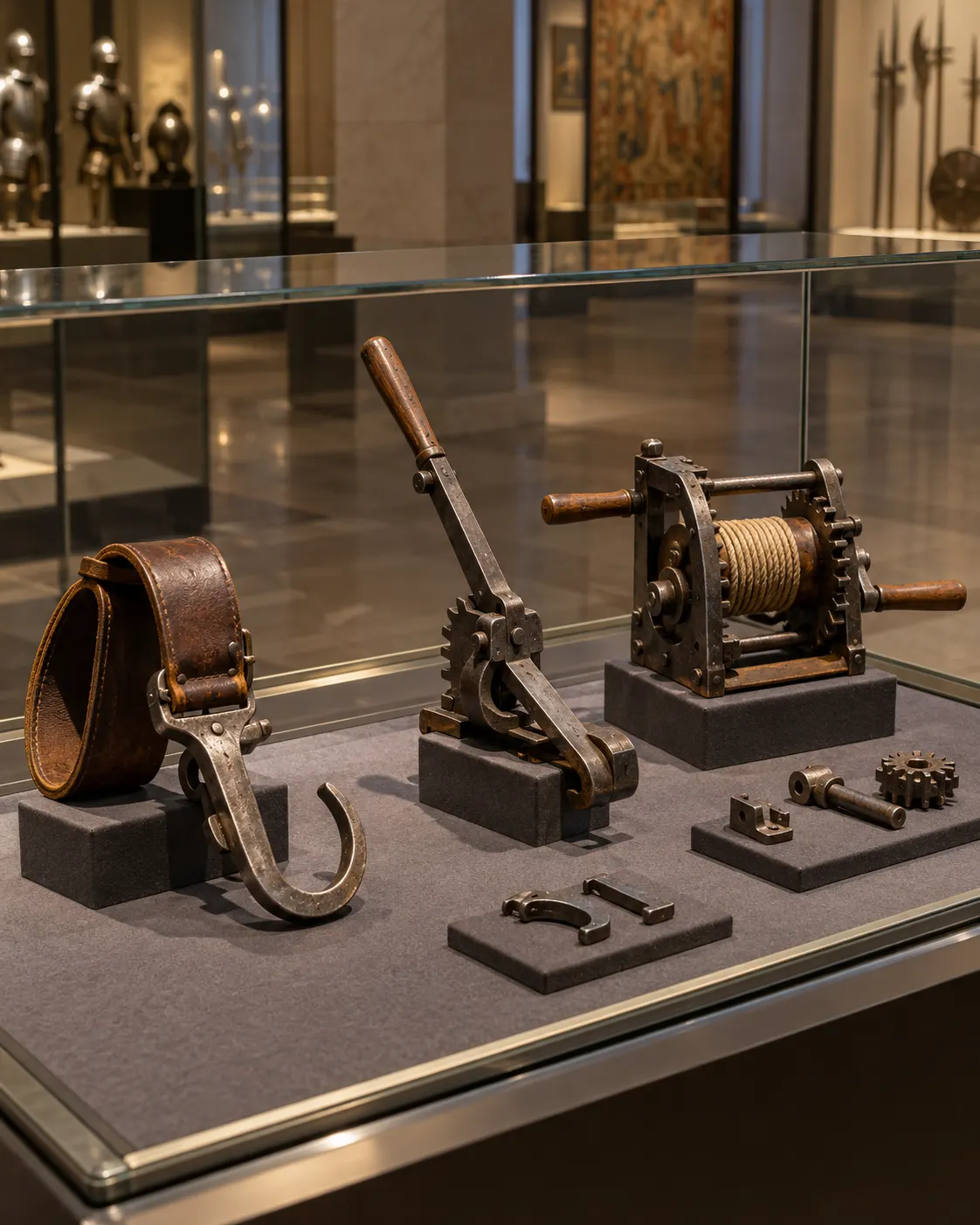
AI-generated with OpenAI image generation. Prompt: “Distinct photorealistic editorial museum collection scene showing a range of historical crossbow spanning devices arranged beneath a glass display: belt hook, compact lever, and windlass components as inert artifacts, no operational setup, no bolts, no people, no text or logos. Quiet gallery lighting, portrait 4:5.”

AI-generated with OpenAI image generation. Prompt: “Photorealistic editorial cover about historical crossbow spanning mechanisms. A medieval crossbow displayed safely in a museum case beside several nonfunctional antique spanning aids such as a simple hook and a wooden lever, no bolts, no people, no action, no readable text or logos. Neutral artifact light, scholarly documentary style, portrait 4:5.”

Listen to fact0:00 / —

As crossbows grew more powerful, drawing them by hand became difficult. Different aids were used, from a belt hook to lever mechanisms and windlasses. The Metropolitan Museum documents a wide range of such devices on European crossbows from 1250 to 1850. There was no single linear sequence used on every crossbow: the mechanism depended on period, bow strength, and weapon purpose.