Age Estimates and Genomic Clues to Longevity
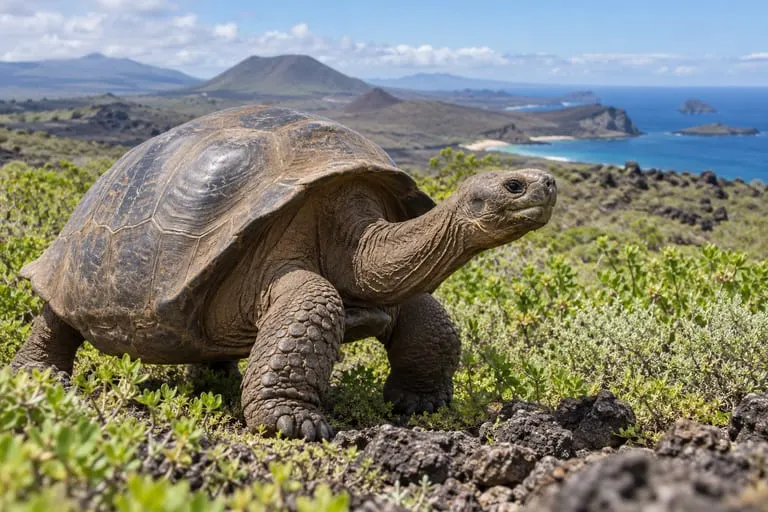
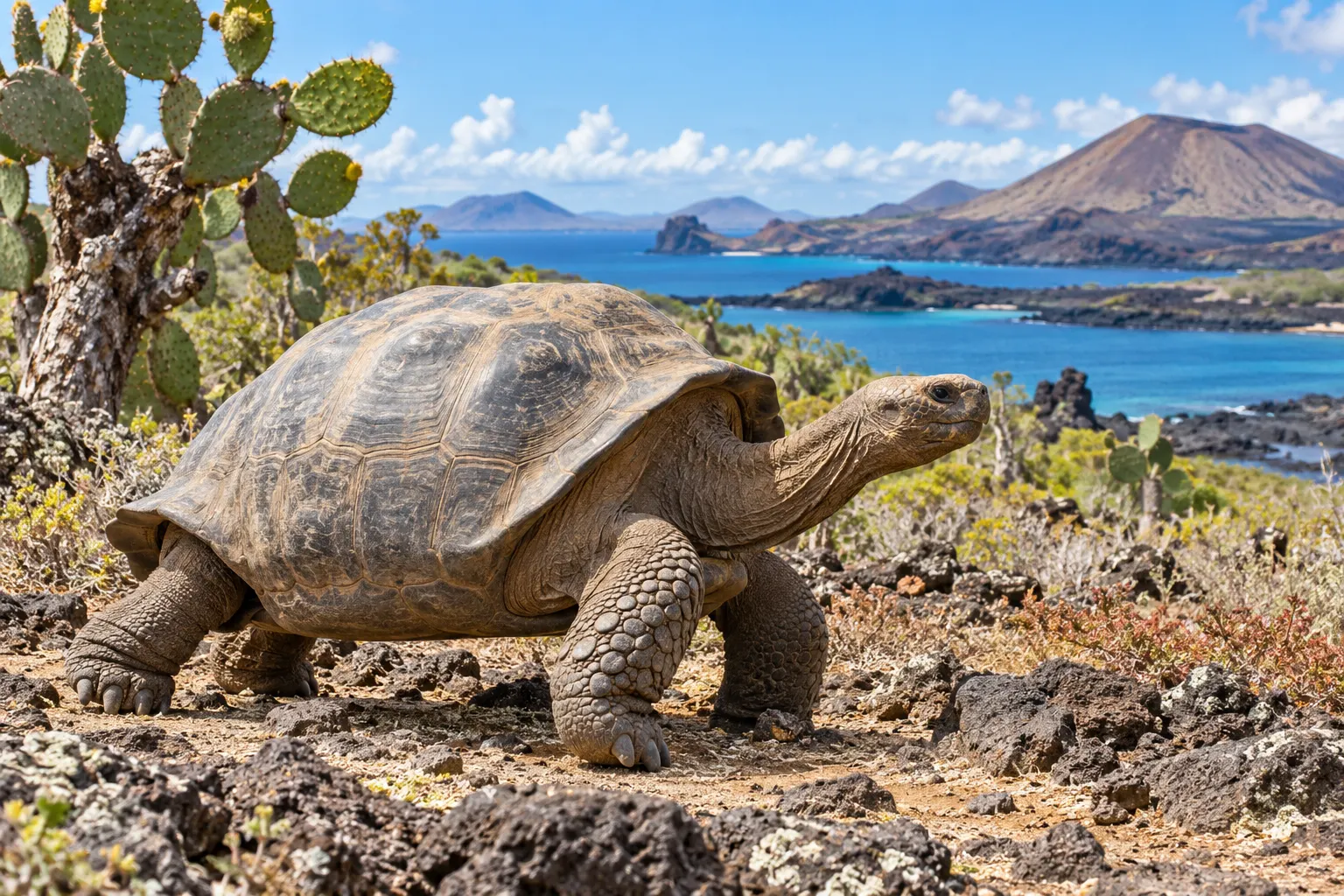
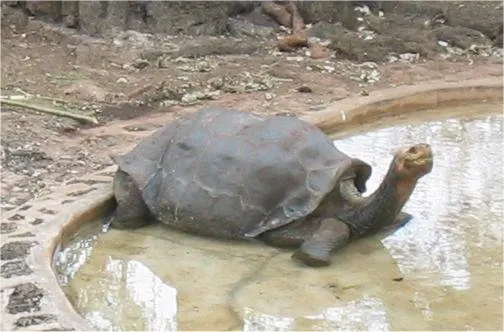
оптимізовано з `media/galapagos-tortoise-cover-ai.png`: 768×512 px (половина початкової ширини й висоти), JPEG quality 82.
Longevity estimates for Galápagos giant tortoises should be distinguished by the kind of evidence. A conservation fact sheet gives an approximate lifespan of one hundred years in the wild; a reptile review lists about one hundred and fifty years as a possible upper estimate, and its maximum-lifespan table includes an estimate of one hundred and seventy-seven years for a captive individual. This is not an average lifespan or a precisely measured universal record: ages of historical individuals are often approximate.
A genomic comparison of Lonesome George, the last known member of the extinct Pinta lineage, and an Aldabra giant tortoise identified candidate variants and gene changes associated with DNA repair, inflammation, immunity, and age-related disease. Such cross-species associations help generate hypotheses, but they do not establish the causes of longevity in Galápagos tortoises specifically. Body size, metabolism, and cellular maintenance remain active research questions, not a complete causal model.