Temperature with Altitude and Sunny West Cirque
In the troposphere, air temperature decreases by about 6.5°C per kilometer of altitude on average, but the rate varies with weather, humidity, and location. This is an average environmental lapse rate; it is not the same as the dry adiabatic cooling of an individual unsaturated air parcel, about 9.8°C/km. As air rises, lower pressure allows it to expand and cool, while actual temperatures reflect many processes.
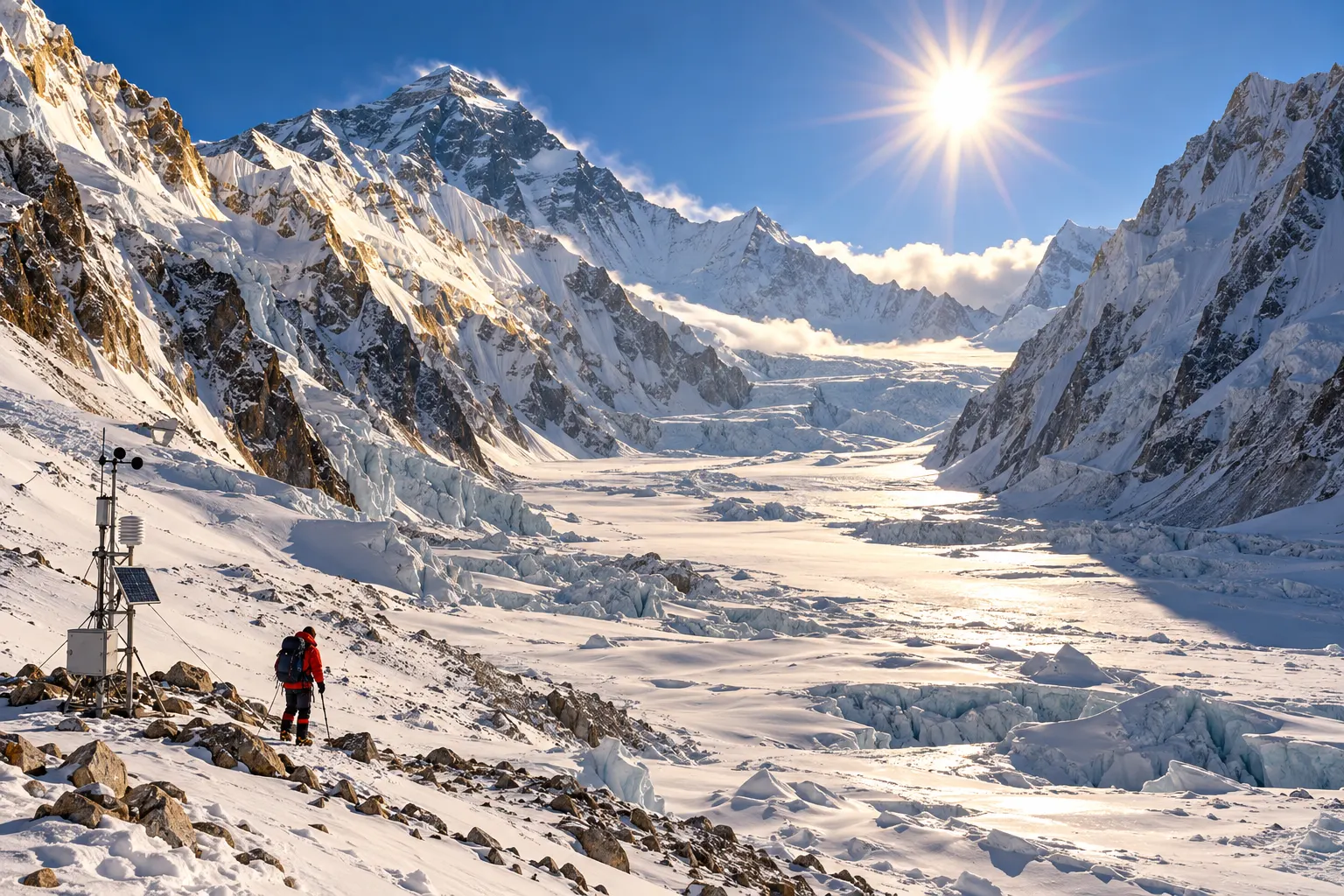
At high altitude, strong solar radiation, reflection from snow, and light winds can make conditions feel hot even when the surrounding air is cold. Everest-region expedition reports have described heating in direct sun and inside tents to about 38°C. The +35°C figure should be treated as a possible local value in a sunny, calm Western Cwm, not as a typical air temperature above 6,000 m.