A little wonder, every day
German money made from wood and other unusual materials
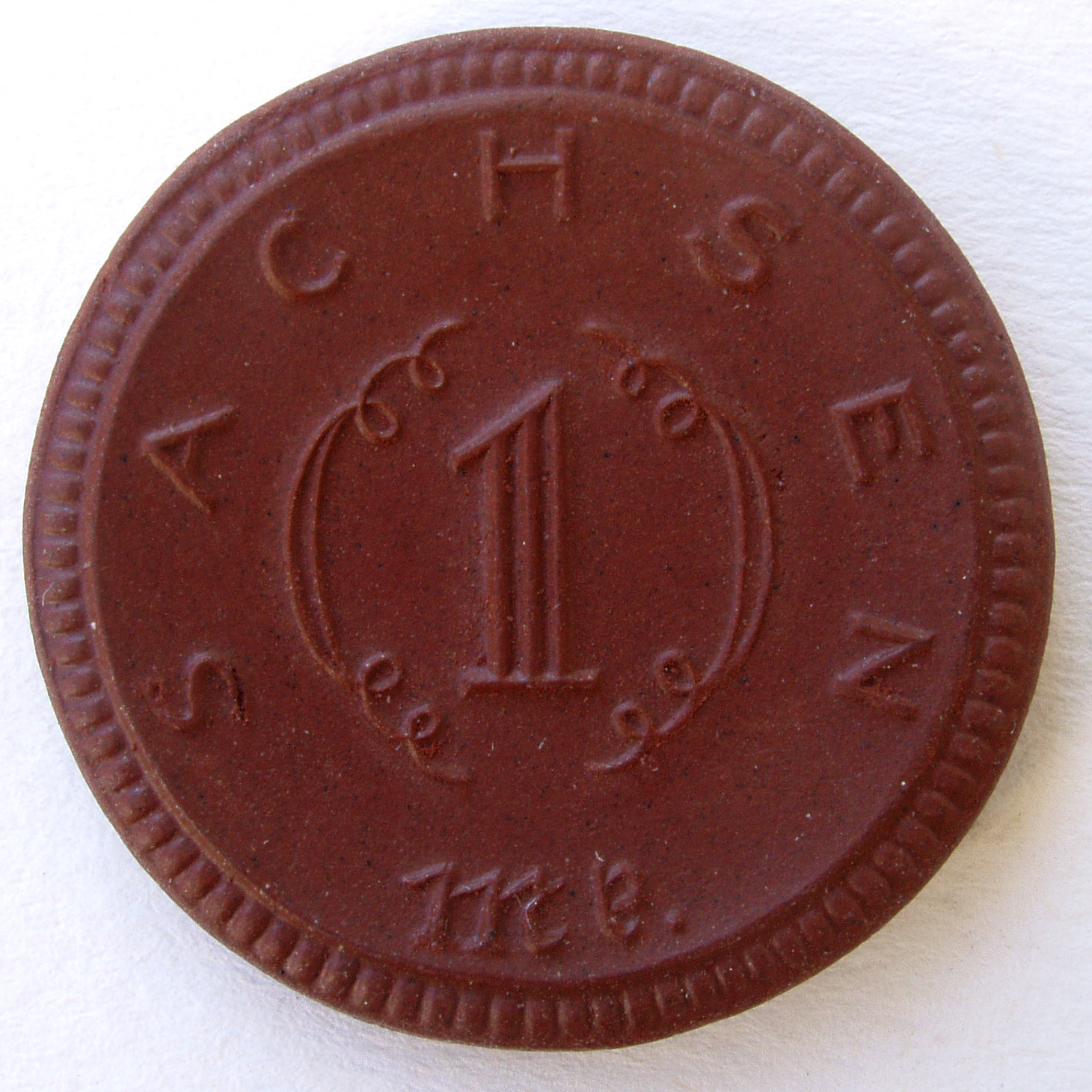
German local emergency money from Saxony, 1921: a one-mark porcelain piece.
German Notgeld, or emergency local money, was made from more than paper. Issues used wood, ceramic, fabric, cardboard, leather and metal foil. Towns and other institutions filled shortages of ordinary small change, particularly during and after the First World War. [1, 2]
An unusual material does not by itself prove that a particular issue circulated widely in everyday transactions. Notgeld became popular with collectors, and some series continued to be produced after the original economic need had passed. Each object therefore needs its issuer, date and purpose identified.