WattSearch
Your WattLeaderboard
Language
Autoplay narration
Appearance

Feedback

Have a question or an idea? Something not working? Send us a message.

What would you like to share?
Up to 3 files, 5 MB each, 12 MB total.
Or contact us directly

Direct contacts open a separate chat or email. Files attached here are not included.

arohalya@gmail.com
A little wonder, every day

Clarke’s satellite orbit
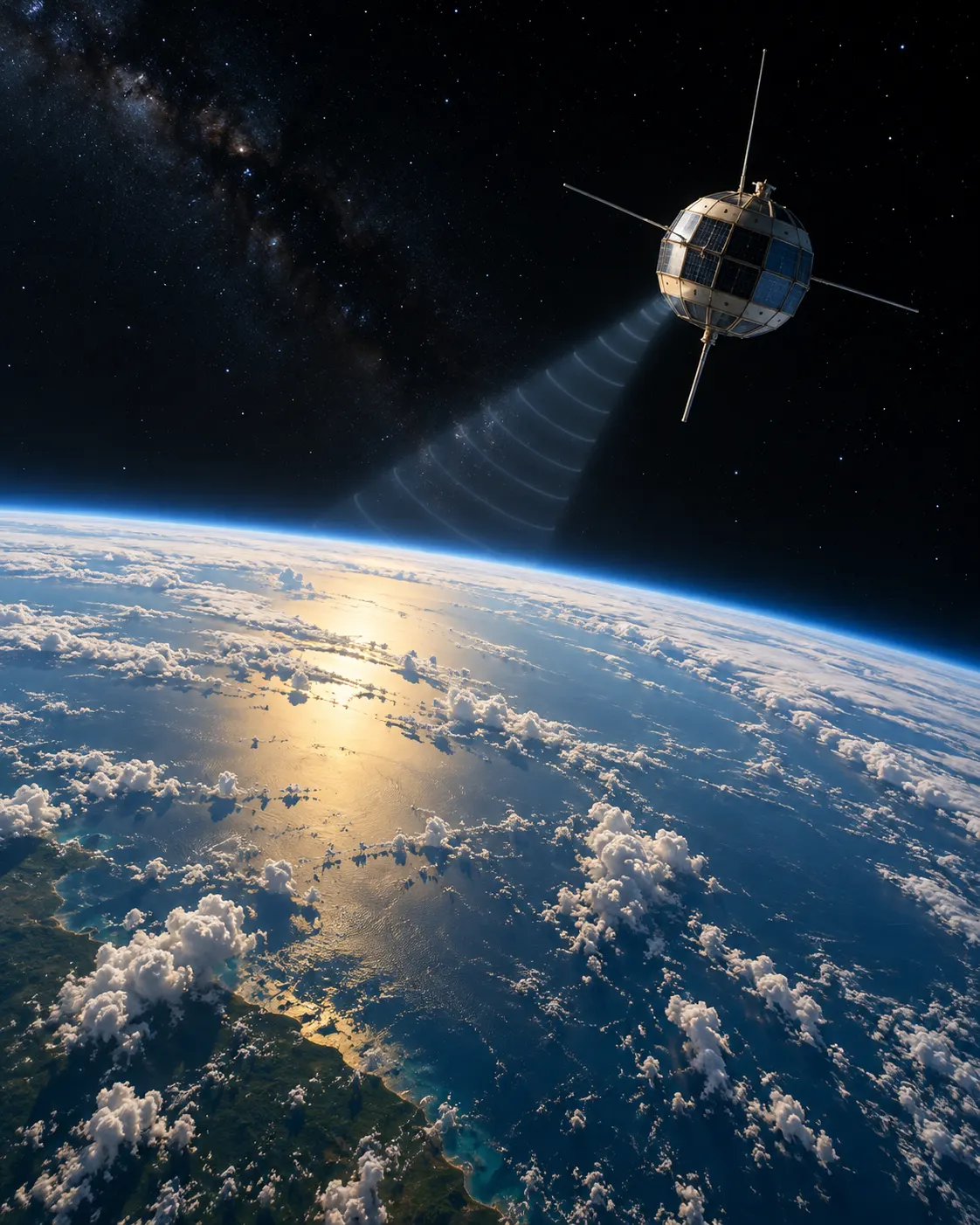
AI-generated cover (created 2026-10-19), showing a generic early communications satellite above Earth. Exact prompt: “Photorealistic editorial cover for a fact about Arthur C. Clarke's 1945 geostationary satellite proposal: a small early communications satellite above Earth's curved equatorial horizon, with a faint radio signal beam, vertical 4:5. Historically evocative but generic, no text, no logos, not presented as a photograph from 1945.”
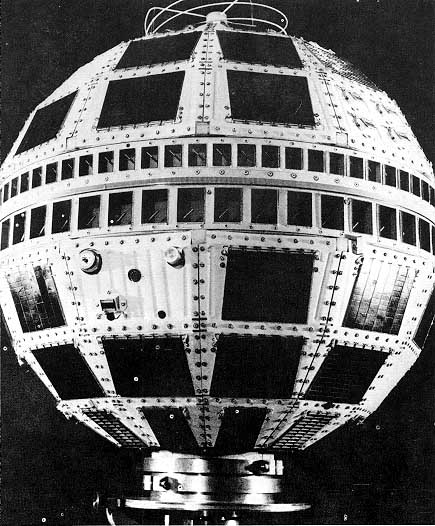
Photograph of the Telstar 2 communications satellite (1963), NASA Goddard Space Flight Center. Original file page: https://commons.wikimedia.org/wiki/File:Telstar_2.jpg. Page identifies NASA as creator/source and states public domain in the United States as a NASA-created work. Attribution: NASA. Downloaded unmodified; image demonstrates a later communications satellite, not a Clarke design.
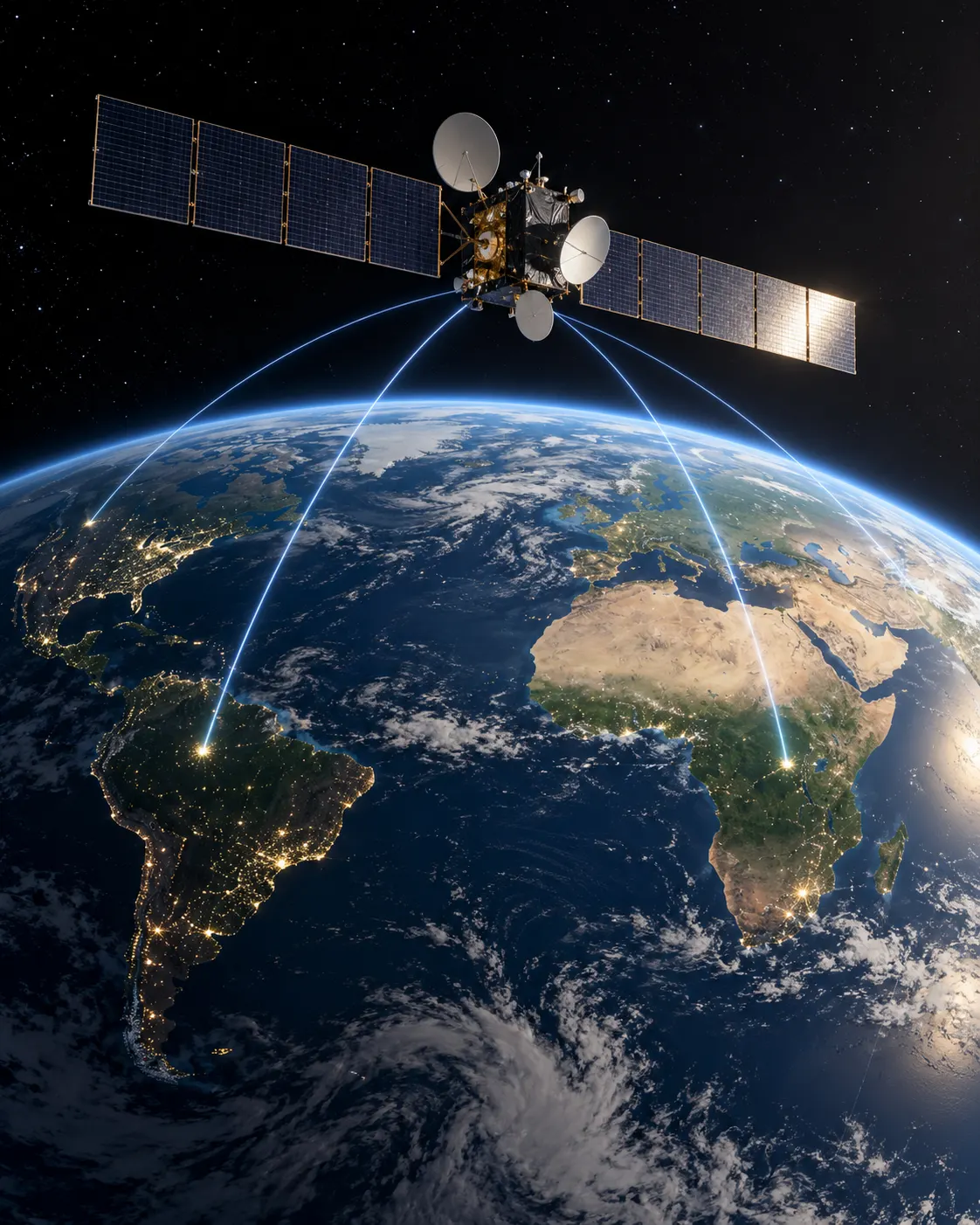
AI-generated scientific visualization (created 2026-10-19) of a generic satellite relaying signals above Earth; not a specific real satellite. Exact prompt: “Photorealistic editorial visualization of a geostationary communications satellite above Earth's equator, with the planet's curvature visible and subtle radio links reaching distant continents, vertical 4:5. Accurate scientific illustration, one satellite, no labels or text, not a specific real satellite.”
Photograph of the Telstar 1 launch, July 10, 1962; NASA/Kennedy Space Center. Smithsonian National Air and Space Museum asset page: https://commons.wikimedia.org/wiki/File:Thor-Delta_(Delta_11)_launches_Telstar-1_satellite_(1962-07-10,_Cape_Canaveral).jpg. Commons file page identifies NASA as creator, launch date and original caption; it states public domain in the U.S. as a NASA-created work. Attribution: NASA/KSC. Unmodified.
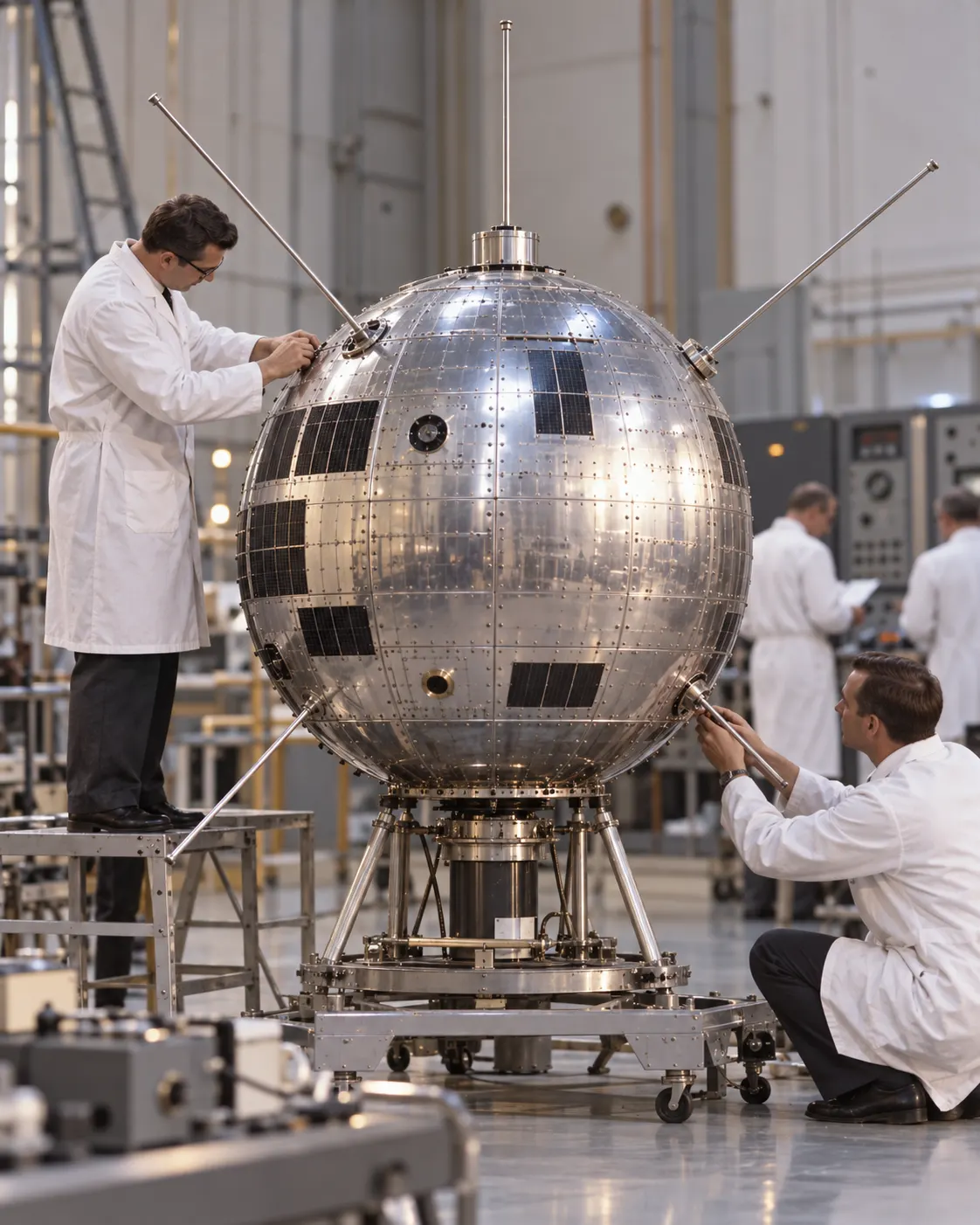
AI-generated editorial reconstruction (created 2026-10-19) of an early 1960s satellite being assembled; not a documentary photograph or a specific Telstar. Exact prompt: “Photorealistic editorial image of an early 1960s communications satellite being prepared in a clean spacecraft workshop, spherical metallic body with simple antennas, technicians in period clothing in soft focus, vertical 4:5. Generic scene inspired by the dawn of satellite communications, not a specific Telstar photograph, no readable text or logos.”

AI-generated cover (created 2026-10-19), showing a generic early communications satellite above Earth. Exact prompt: “Photorealistic editorial cover for a fact about Arthur C. Clarke's 1945 geostationary satellite proposal: a small early communications satellite above Earth's curved equatorial horizon, with a faint radio signal beam, vertical 4:5. Historically evocative but generic, no text, no logos, not presented as a photograph from 1945.”

Listen to fact0:00 / —

In 1945, Arthur C. Clarke published “Extra-Terrestrial Relays” in *Wireless World*, proposing satellites with an orbital period of about a day to relay radio and television signals over long distances. If such an orbit is circular and lies above the equator, a satellite appears fixed over one point on Earth—the principle behind a geostationary communications satellite. Clarke popularized and developed this concept in detail, but he was not the first to imagine artificial satellites or space stations.