WattПошук
Твій WattРейтинг
Мова
Автоозвучення
Оформлення

Зворотний зв’язок

Є питання чи ідея? Щось не працює? Надішли нам повідомлення.

Про що хочеш написати?
До 3 файлів, 5 МБ кожен, 12 МБ разом.
Або зв’яжися напряму

Прямі контакти відкривають окремий чат або лист. Прикріплені тут файли через них не передаються.

arohalya@gmail.com
Щодня щось дивовижне

Орбіта Кларка

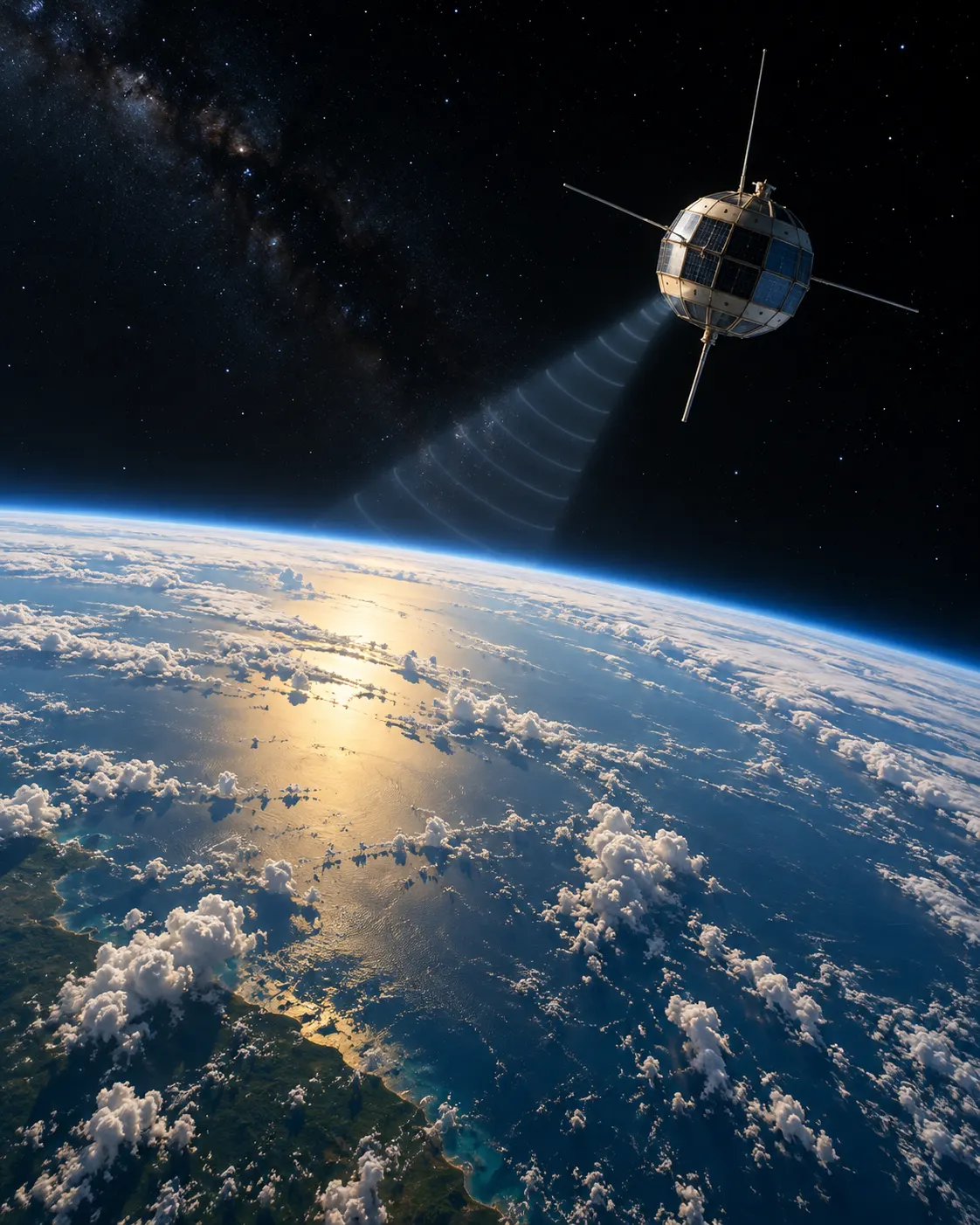
AI-generated cover (created 2026-10-19), showing a generic early communications satellite above Earth. Exact prompt: “Photorealistic editorial cover for a fact about Arthur C. Clarke's 1945 geostationary satellite proposal: a small early communications satellite above Earth's curved equatorial horizon, with a faint radio signal beam, vertical 4:5. Historically evocative but generic, no text, no logos, not presented as a photograph from 1945.”
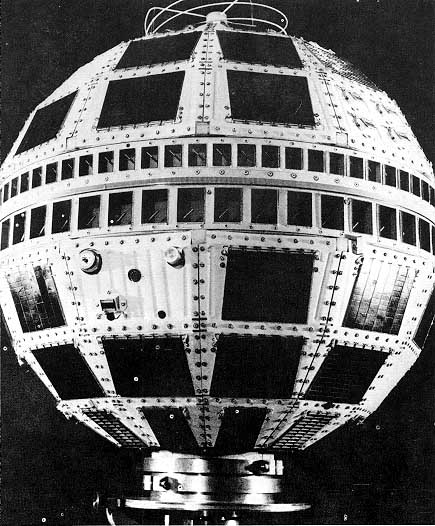
Photograph of the Telstar 2 communications satellite (1963), NASA Goddard Space Flight Center. Original file page: https://commons.wikimedia.org/wiki/File:Telstar_2.jpg. Page identifies NASA as creator/source and states public domain in the United States as a NASA-created work. Attribution: NASA. Downloaded unmodified; image demonstrates a later communications satellite, not a Clarke design.
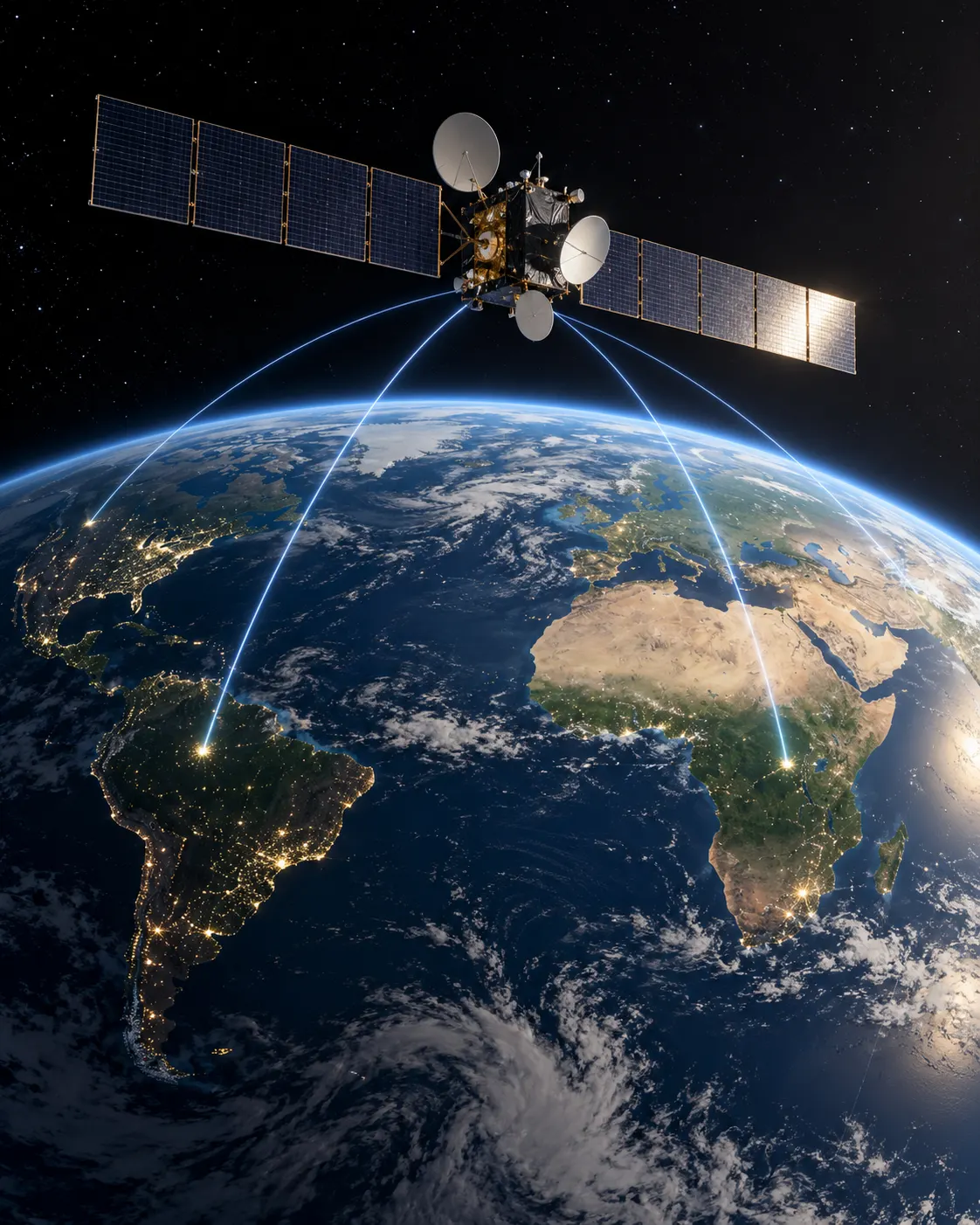
AI-generated scientific visualization (created 2026-10-19) of a generic satellite relaying signals above Earth; not a specific real satellite. Exact prompt: “Photorealistic editorial visualization of a geostationary communications satellite above Earth's equator, with the planet's curvature visible and subtle radio links reaching distant continents, vertical 4:5. Accurate scientific illustration, one satellite, no labels or text, not a specific real satellite.”
Photograph of the Telstar 1 launch, July 10, 1962; NASA/Kennedy Space Center. Smithsonian National Air and Space Museum asset page: https://commons.wikimedia.org/wiki/File:Thor-Delta_(Delta_11)_launches_Telstar-1_satellite_(1962-07-10,_Cape_Canaveral).jpg. Commons file page identifies NASA as creator, launch date and original caption; it states public domain in the U.S. as a NASA-created work. Attribution: NASA/KSC. Unmodified.
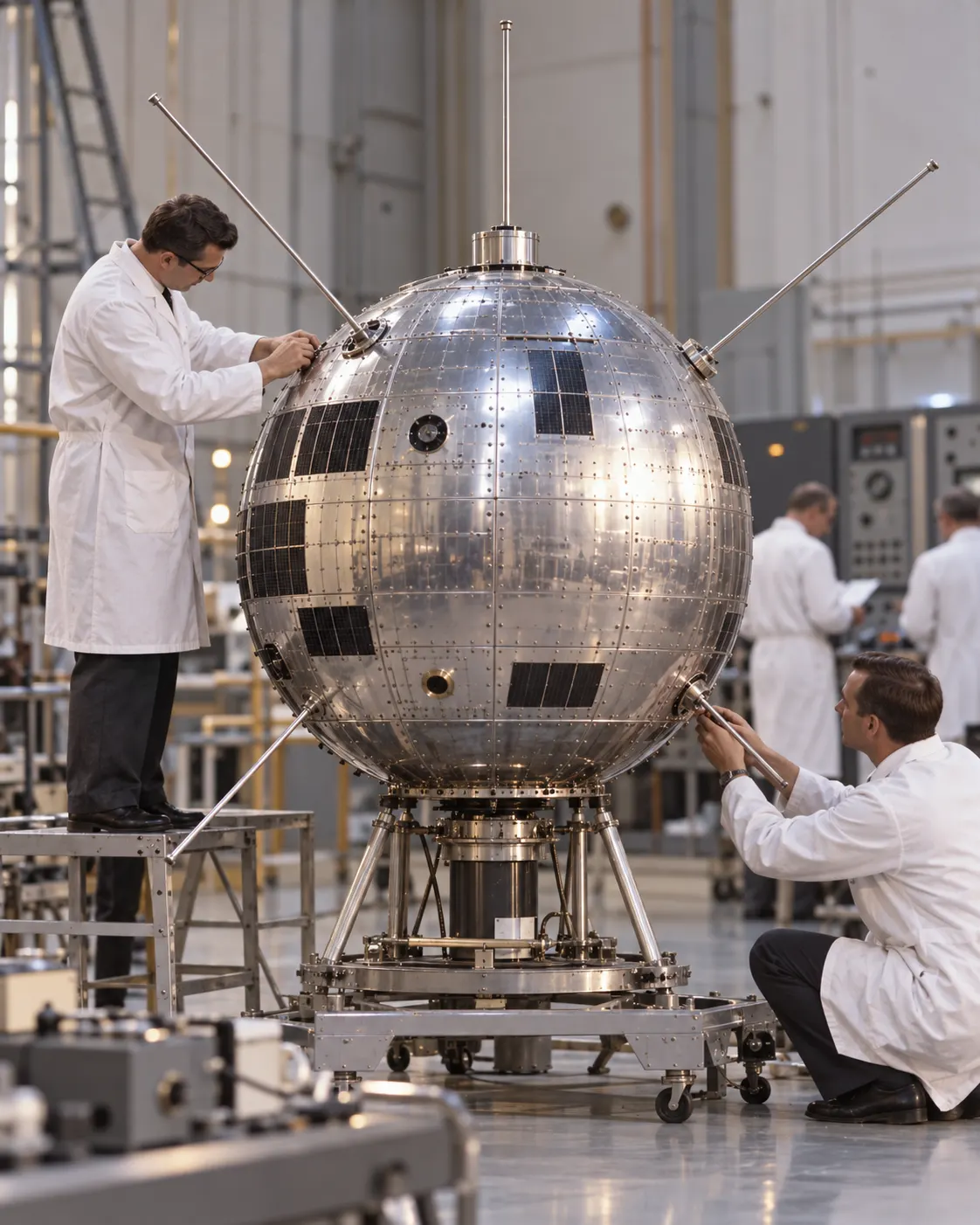
AI-generated editorial reconstruction (created 2026-10-19) of an early 1960s satellite being assembled; not a documentary photograph or a specific Telstar. Exact prompt: “Photorealistic editorial image of an early 1960s communications satellite being prepared in a clean spacecraft workshop, spherical metallic body with simple antennas, technicians in period clothing in soft focus, vertical 4:5. Generic scene inspired by the dawn of satellite communications, not a specific Telstar photograph, no readable text or logos.”

AI-generated cover (created 2026-10-19), showing a generic early communications satellite above Earth. Exact prompt: “Photorealistic editorial cover for a fact about Arthur C. Clarke's 1945 geostationary satellite proposal: a small early communications satellite above Earth's curved equatorial horizon, with a faint radio signal beam, vertical 4:5. Historically evocative but generic, no text, no logos, not presented as a photograph from 1945.”

Слухати факт0:00 / —

У 1945 році Артур Кларк опублікував у журналі *Wireless World* статтю «Позаземні ретранслятори», де запропонував використовувати супутники на орбіті з періодом обертання близько доби для передавання радіо- й телевізійних сигналів на великі відстані. Якщо така орбіта кругова й лежить над екватором, супутник здається нерухомим над однією точкою Землі — це принцип геостаціонарного супутника зв’язку. Кларк популяризував і докладно розробив цю концепцію, але не першим вигадав штучні супутники чи космічні станції.