WattSearch
Your WattLeaderboard
Language
Autoplay narration
Appearance

Feedback

Have a question or an idea? Something not working? Send us a message.

What would you like to share?
Up to 3 files, 5 MB each, 12 MB total.
Or contact us directly

Direct contacts open a separate chat or email. Files attached here are not included.

arohalya@gmail.com
A little wonder, every day

Clothing color as a sign of status
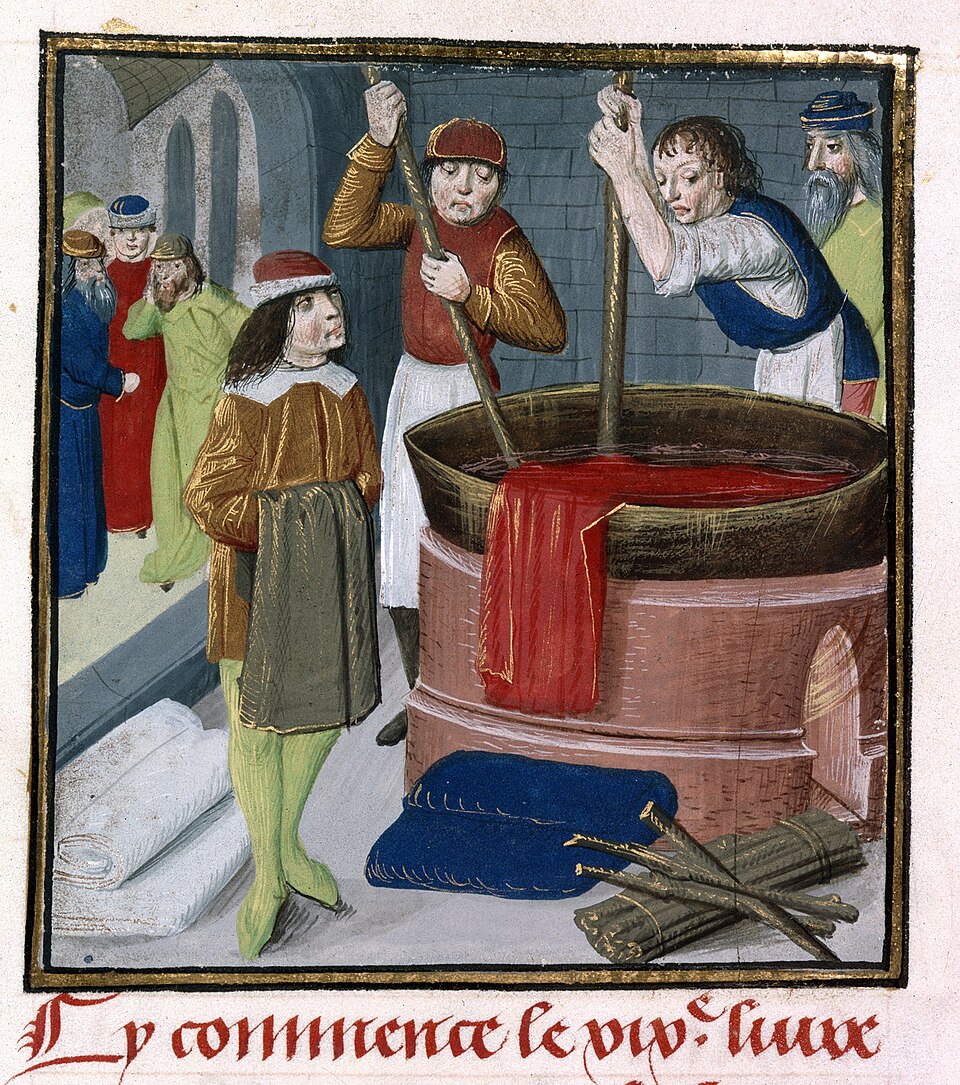
Dyers soaking red cloth, Flemish manuscript from 1482, British Library, CC0. https://commons.wikimedia.org/wiki/File:Dyers_soaking_red_cloth_in_a_heated_barrel_-_Des_Proprietez_des_Choses_(Volume_II)_(1482),_f.269_-_BL_Royal_MS_15_E_III.jpg
14th-century manuscript illustration of a scholar, Leipzig University Library via Wikimedia Commons, public domain. https://commons.wikimedia.org/wiki/File:Magister+.JPG

Dyers soaking red cloth, Flemish manuscript from 1482, British Library, CC0. https://commons.wikimedia.org/wiki/File:Dyers_soaking_red_cloth_in_a_heated_barrel_-_Des_Proprietez_des_Choses_(Volume_II)_(1482),_f.269_-_BL_Royal_MS_15_E_III.jpg

Listen to fact0:00 / —

In medieval Europe, clothing color could signal a person’s social standing. For example, manuscripts often show scholars in costly red, while peasants are associated with inexpensive wool in natural gray and brown shades.