WattSearch
Your WattLeaderboard
Language
Autoplay narration
Appearance

Feedback

Have a question or an idea? Something not working? Send us a message.

What would you like to share?
Up to 3 files, 5 MB each, 12 MB total.
Or contact us directly

Direct contacts open a separate chat or email. Files attached here are not included.

arohalya@gmail.com
A little wonder, every day

A collider beneath two countries
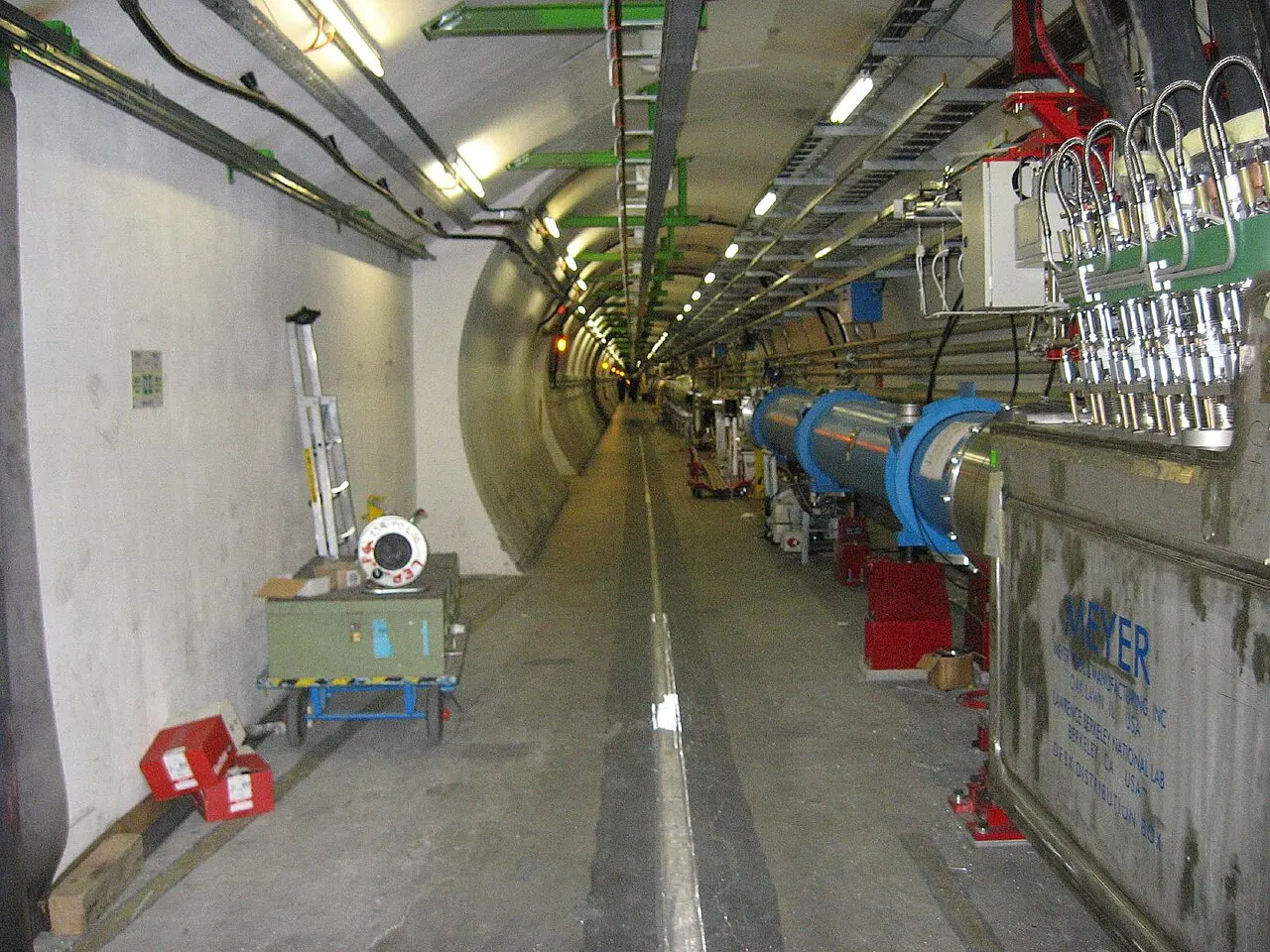
Документальне фото дипольних магнітів Великого адронного колайдера / Documentary photograph of Large Hadron Collider dipole magnets. Credit: alpinethread; CC BY-SA 2.0. https://creativecommons.org/licenses/by-sa/2.0 Source: https://commons.wikimedia.org/?curid=3699867
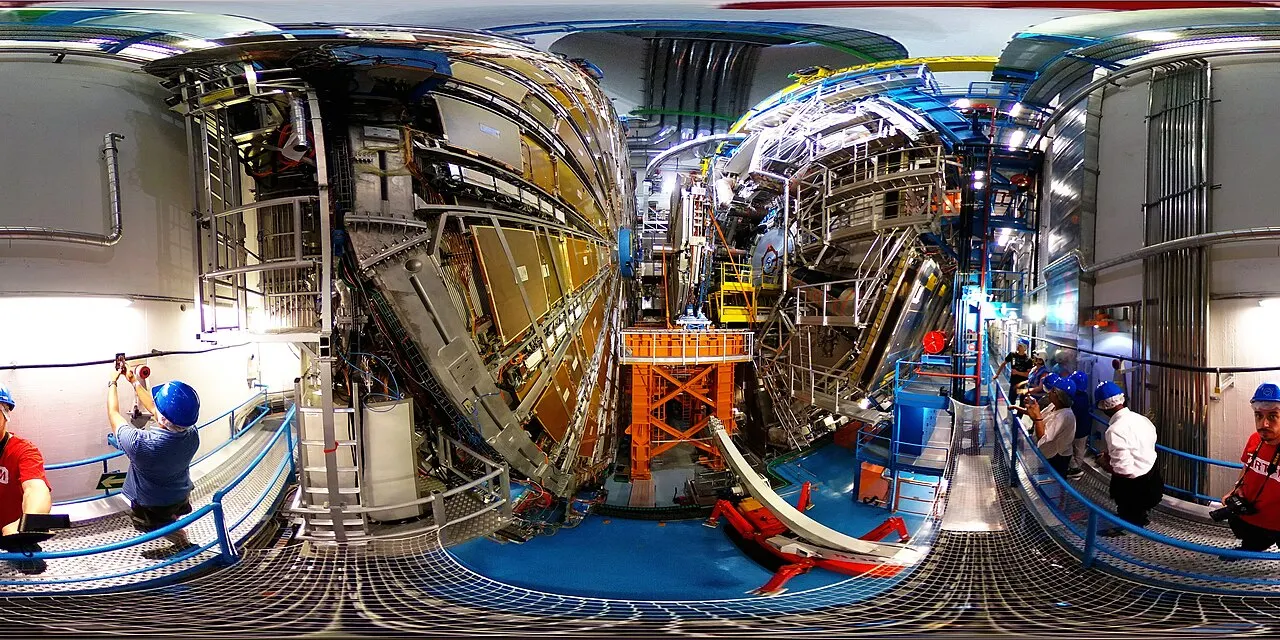
Документальне фото детектора ATLAS у CERN; детектор відрізняється від кільця прискорювача / Documentary photograph of the ATLAS detector at CERN; the detector is distinct from the accelerator ring. Credit: SimonWaldherr; CC BY-SA 4.0. https://creativecommons.org/licenses/by-sa/4.0 Source: https://commons.wikimedia.org/?curid=82406626

Документальне фото дипольних магнітів Великого адронного колайдера / Documentary photograph of Large Hadron Collider dipole magnets. Credit: alpinethread; CC BY-SA 2.0. https://creativecommons.org/licenses/by-sa/2.0 Source: https://commons.wikimedia.org/?curid=3699867

Listen to fact0:00 / —

The Large Hadron Collider at CERN is an accelerator ring roughly 27 kilometres long in a tunnel beneath the French–Swiss border near Geneva. Superconducting magnets guide particle beams, while accelerating structures increase their energy. On 4 July 2012 the ATLAS and CMS experiments announced a particle with properties consistent with the Higgs boson. The tunnel’s typical depth is about 100 metres, but it is not identical around the entire ring.