WattSearch
Your WattLeaderboard
Language
Autoplay narration
Appearance

Feedback

Have a question or an idea? Something not working? Send us a message.

What would you like to share?
Up to 3 files, 5 MB each, 12 MB total.
Or contact us directly

Direct contacts open a separate chat or email. Files attached here are not included.

arohalya@gmail.com
A little wonder, every day

Webb sees galaxies in the early universe
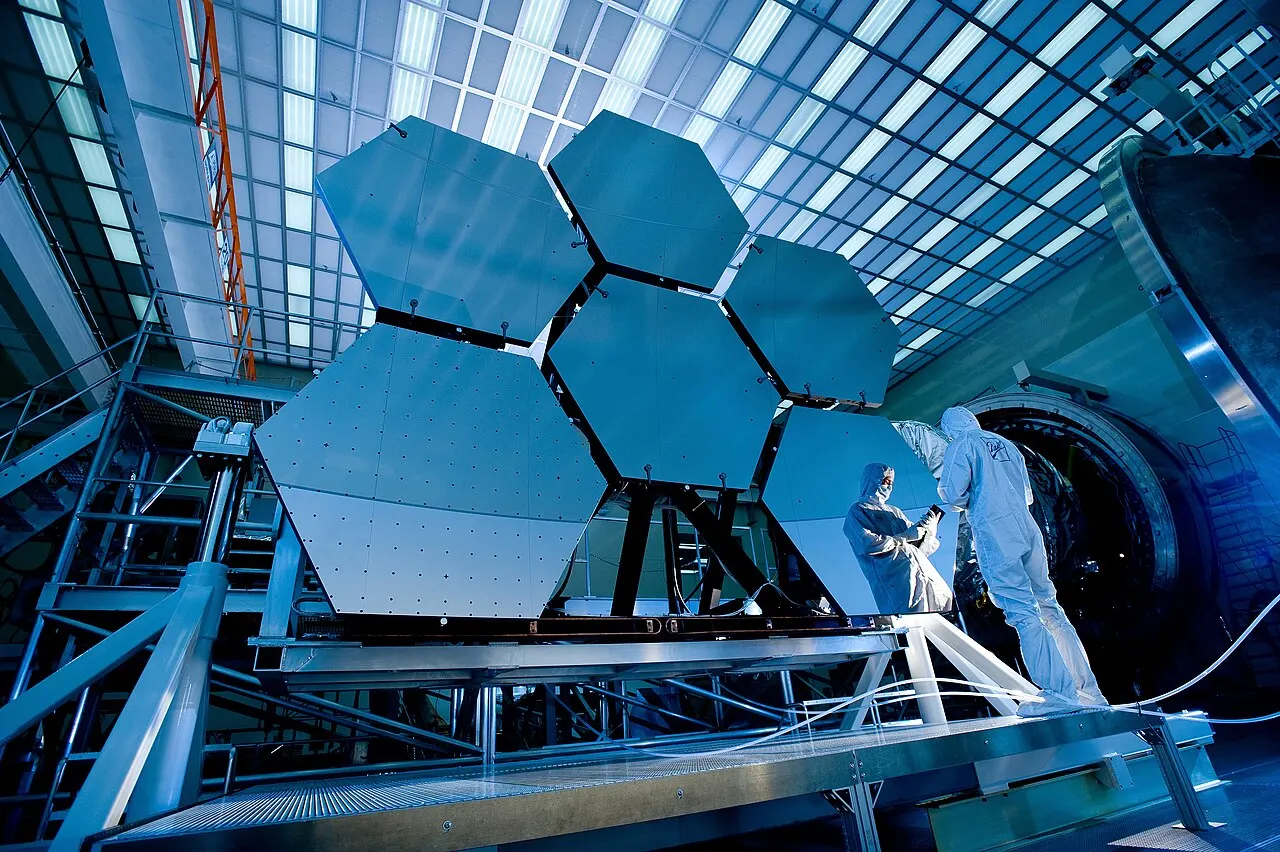
Документальне фото сегментів дзеркала «Вебба» під час кріогенних випробувань у 2010 році, NASA/MSFC / Documentary photograph of Webb mirror segments during cryogenic testing in 2010, NASA/MSFC; not the fully assembled observatory at L2.
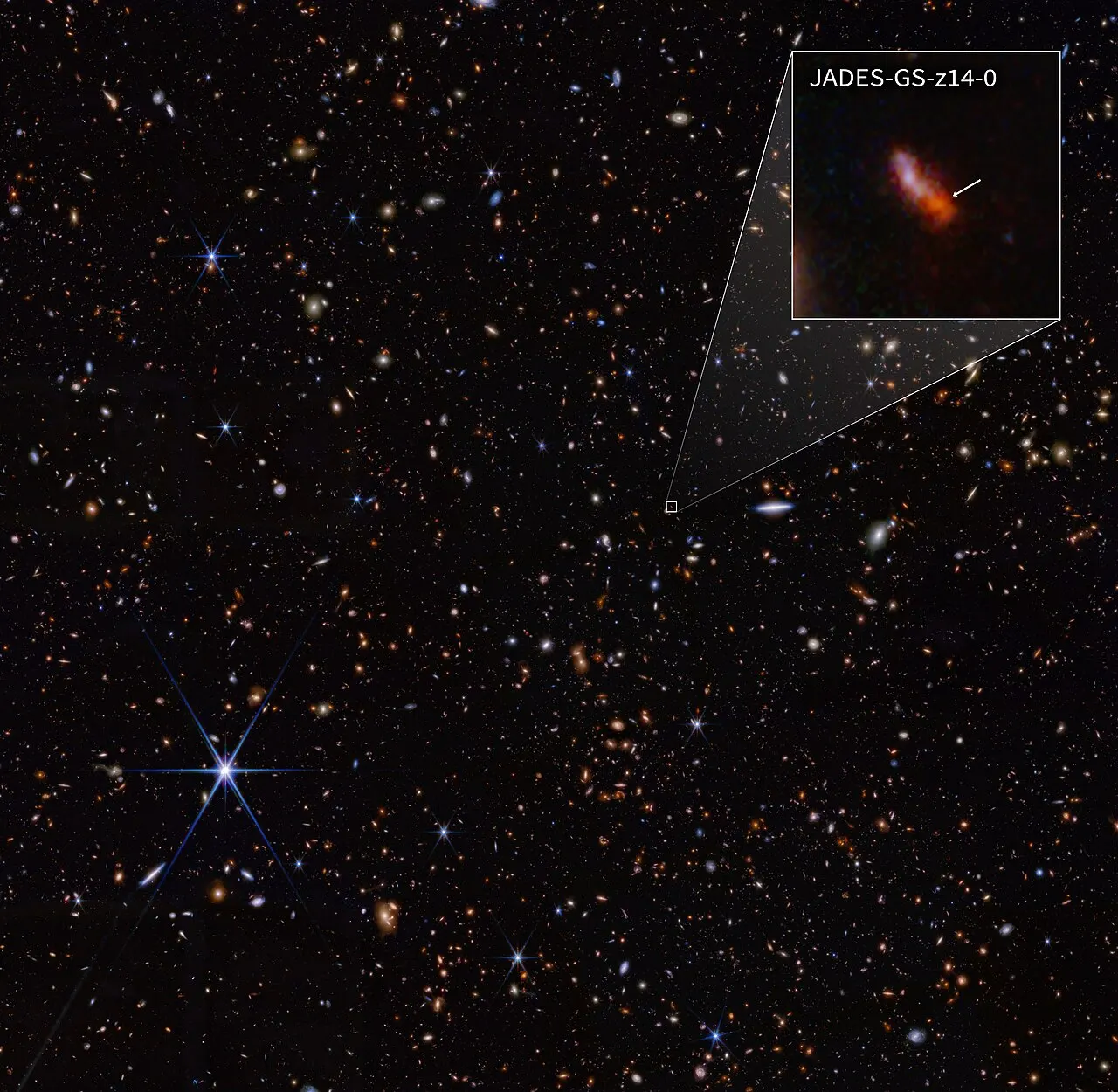
Наукове зображення JADES-GS-z14-0 з анотованим збільшенням, 2024 / Scientific image of JADES-GS-z14-0 with an annotated pullout, 2024; processed telescope data, not an artist’s impression. Original title’s distance-record claim is historical. Credit: NASA, ESA, CSA, STScI, B. Robertson (UC Santa Cruz), B. Johnson (CfA), S. Tacchella (Cambridge), P. Cargile (CfA); CC BY 4.0. https://creativecommons.org/licenses/by/4.0 Source: https://commons.wikimedia.org/?curid=148912099

Документальне фото сегментів дзеркала «Вебба» під час кріогенних випробувань у 2010 році, NASA/MSFC / Documentary photograph of Webb mirror segments during cryogenic testing in 2010, NASA/MSFC; not the fully assembled observatory at L2.

Listen to fact0:00 / —

The James Webb Space Telescope launched on 25 December 2021 after lengthy development and launch delays. In a 2018 budget review NASA estimated its lifecycle cost at $9.66 billion; this was a dated estimate with a defined scope, rather than a universal current price. In 2024 Webb confirmed the galaxy JADES-GS-z14-0, seen as it was roughly 300 million years after the Big Bang. This describes the epoch of the observed light, rather than the age of its stars. The checked chronology does not substantiate “three cancellations.”